National Police Association Podcast with Guest, John Nantz, FBI Supervisory Special Agent (Retired) and Columnist Part 2
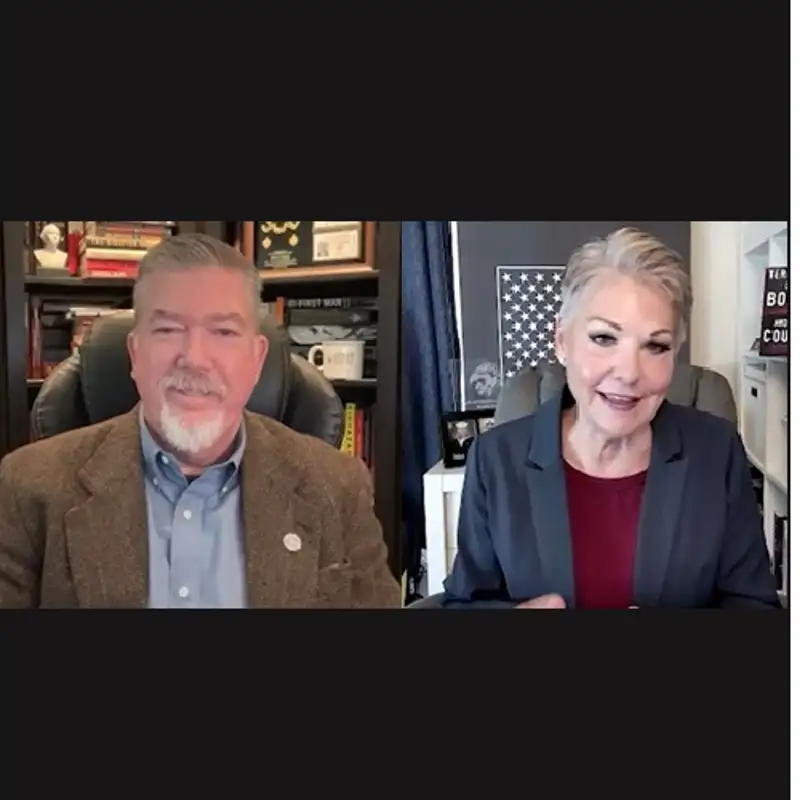
Hi. This is sergeant Betsy Brantner Smith at the National Police Association, and this is part two of my interview with Retired Supervisory Special Agent John Nantz. John and his friend Chris Hinkle had the opportunity recently to sit down with the FBI Director, Kash Patel, at FBI headquarters and talk about so many different issues. And John Nantz, who also writes for Restoration News, he writes for Town Hall, he's got a phenomenal substack, he was able to sit down with us and talk about how that interview came to be and also talk about some of the many many issues that director Kash Patel spoke with him about so I hope you enjoy part two and one of the things that you and you just mentioned it one of the things you talked to the director about was, you know, when in talking about equipment and resources and stuff, you know, we think, oh, the FBI just has more money than God, right? Know, and I was surprised to hear the director talk about that the budget had stayed the same for, I believe, six years, the last six years, and finally he has been able to put together a budget.
John Nantz:I don't think it's been approved yet, but put together a budget that's really more realistic. And I think a lot of that would be certainly equipment, technology, and one of the things he talked about too was support staff. You know, the FBI just isn't a bunch of agents. You have gotta have analysts and administrative assistants. And and, I mean, you there's so much support staff that the FBI has, and he also talked about some pay raises and things like that.
Betsy Smith:Talk about that budget aspect of it that a lot of people don't really think about.
John Nantz:Well, the FBI's budget is in the billions of dollars, which is a tremendous amount of money. But comparatively speaking, like to the CIA or DHS or some of these other federal, or certainly the Department of War. I'm still trying to get used to calling it DOW, which is, I think, awesome as opposed to calling it DOD. But anyway, compared to those budgets, the FBI's budget is, relatively speaking, somewhat modest. And noticed I that quite a bit when I worked with some agency people when I was a counterintelligence agent with regard to the procedures for paying assets or individuals that we were paying for information.
John Nantz:So I had to go through this really laborious process to get money to pay an asset. And these agency people were literally going into a safe and pulling out cash. And so that's just a little window into the difference and what kind of money we're talking about.
Betsy Smith:Well, and wait, let me just tell you a quick story from the 1980s when I was in narcotics. The FBI went through this period of time in the mid-80s where this is when everybody's trying to take cocaine off the street, all of that. And we the locals in our DEA task force when we needed more money back then we could go to the FBI and they had even more cash than the DEA, than the state police, all that. So things kind of go up and down, right, in trends?
John Nantz:Yeah, yes. You said back in the '80s, right? Is that what you Yeah. Yeah. So where was all the congressional funding going?
John Nantz:Drugs.
Betsy Smith:Right.
John Nantz:So that was the big thing. That's when the FBI got into drugs. I mean, we have a whole separate federal entity that does nothing but drug investigations, right? But everybody's got to get their hand in the till. So the bureau stood up a bunch of drug squads.
John Nantz:I don't know if I remember correctly, but at the height in the '80s in Miami, I think there were probably like 20 drug squads, maybe not quite so many. Now it's a handful, maybe two, three drug squads. So you can see after nineeleven, what was the priority? Counterterrorism. That's where all the congressional funding was going.
John Nantz:And of course, that was sort of the bureau's bailiwick, so tons of money for counterterrorism operations. So back in the '80s, that's why you saw that
Betsy Smith:Yes, we benefited from that back in my day. And I'm glad you brought up nine eleven oh one because in your interview with the director, you guys talked about that whole atmosphere of protecting the homeland. And that term homeland security and of course the actual organization happened after post nineeleven oh one. I think there's kind of a, again, you tell me, I heard a re emphasis on that protecting the homeland because again this is one of the things I want people to recognize you know you got your FBI your field office has got to go to you know Joe's bank that just got robbed. And and yet you're also trying to literally keep people from blowing up the country.
Betsy Smith:I mean, and everything in in between. Talk about that.
John Nantz:Yeah. I don't know if you caught yesterday. Patel just came out and said that the and this is a brand new statistic that's been released. I think it's seven sixteen terrorist plots foiled in this last year alone.
Betsy Smith:Extraordinary.
John Nantz:That's another aspect of really the astounding transparency. You never would have heard about these numbers before. And some of that was politics because Biden's big existential threat during his administration was white violence.
Betsy Smith:White supremacy, right?
John Nantz:Yeah, there you go. Yeah, you should be on the terrorism screening, the TSA list, just for being a white female. And look, there's so many of us out in the field that were like, this is complete nonsense and garbage. There's no foundation, in fact, for this. This is pure politics being driven from the White House to DOJ through Christopher Wray and or before him, Comey.
John Nantz:Right? So
Betsy Smith:Before we keep going, I want you to remind everybody because I wanna do this right in the middle. Where if so somebody's watching this right now, John. When we're done, where can they go find this this time that you spent with director Patel?
John Nantz:Well, the whole interview has been posted to the official FBI's YouTube page, So you can find it there, or you can go to my my substack. I have it there with some commentary and and some photographs, some inside photographs. So you want if you want a little bit more of that type of thing, you can go to my substack at John Nantz thejohnnantz. You can get any of my social media on X or Facebook or LinkedIn or
Betsy Smith:Instagram. They're everywhere.
John Nantz:You gotta be, right? You gotta be everywhere. So you you can go to any of those platforms, and you can find links to to my substack with some of the other additional information. Or you can go to the YouTube, the FBI's YouTube, so you can see the whole interview there.
Betsy Smith:Awesome. Awesome. So let's keep going because this would you guys just covered so much. And and one of the things you did in part of the interview is you guys walking around with the director and him talking about so many of these issues. And one of the things that he talked about was the real time information that he is able to provide leadership in this country, which I was really astounded by that.
Betsy Smith:Can you tell because we always see, you know, whether it's the president or the cabinet, you know, in the situation room, or we hear about an active shooter situation or terrorism situation, and and, the reporter always says, and the president is being briefed. You know, the president has been briefed. Talk about how that actually happens.
John Nantz:So the interview took place in the DISC or the Director Strategic Information Center. So that's never been photographed or videoed before. It was very, very cool to be able to do that. It used to be called SIOP, Strategic Something Information Center, Strategic Operations Information And that had been developed, I think, back in the '80s. It had become very anachronistic.
John Nantz:And literally, when a crisis would occur, you'd have people shouting across the room at each other, trying to get information to the right place. So it's just
Betsy Smith:Like a movie.
John Nantz:Yeah. Something needed to be done. So this is one of Patel's, I think, flagship reform efforts, and it is so impressive. The individual who has been managing this actually modeled the DISC on combat operations centers in theater in Afghanistan and Iraq. So you think it would be common sense, but it's not.
John Nantz:So you literally have an intake station. And then rest of the actual ergonomics of the disc adheres to the information flow. So you don't have people yelling across the room at each other. There are also elements of technology that have been really, really nicely developed. There's basically a messaging system that connects all of FBI leadership.
John Nantz:So whenever you have a critical incident, you have a case agent on the ground, first thing that happens is that individual's phone blows up with his supervisor, the ASAC, the SAC. And if it's really big, you got people from headquarters calling. Hey, what's going on? What's the latest details? So now they've eliminated that kind of stove piping.
John Nantz:And the last thing you want is your guy or girl, lady on the ground being inundated with questions from supervision when they're trying to deal with, in real time
Betsy Smith:Yeah, the actual crime.
John Nantz:Exactly right. So there's this messaging system that eliminates all that. They can all go immediately to that messaging system and see exactly what's coming from the field. So the field just puts it in essentially to this messaging app, and then everybody has access to it. Common sense, right?
John Nantz:Common sense, right? So Patel has been implementing all these things. Another very, very interesting point about the DISC. And you saw this early on in Patel's administration. There were a couple of times where the FBI came back to the White House with, well, this is developing.
John Nantz:We'll get back to you momentarily. You don't want to hear that. You're President Trump, right? You don't want to hear from your FBI, hey, give us a second. We're still working on it.
Betsy Smith:Hold on, sir.
John Nantz:Yeah, exactly. Keep your pants on. We're working on it, right? So what has happened, the channels through which information flows have been greatly reduced. Previously, there were up to seven layers of approval and information management that stuff had to go through.
John Nantz:You're getting these inordinate delays. Now that it's been reduced to where the FBI director will be informed within thirty to sixty seconds of a developing situation. They actually showed me this little card. It's like a little briefing card. And the individual who's running or who's kind of heading up the disc right now has the authority to break in any meeting, any discussion if there is a developing occurrence.
John Nantz:And the director will kind of have the bullet points within thirty seconds to a minute because they know the White House will be calling within two minutes. I mean this is exactly how it was explained to me. So they know the time window they have to get their ducks in a row and to be able to appropriately advise and inform the White House with regard to some domestic incident. So I can't say enough good things about it. I mean, compared to the old SIOC, it's just no comparison whatsoever.
John Nantz:And it's an illustration, a concrete illustration of how Patel is being very forward leaning, how he's open to new ideas. One of the things he said in the interview and I've mentioned it in a Restoration of America column that came out just a couple of days ago. Essentially, said that if your response is, this is the way we've always done it, that is not the right response.
Betsy Smith:I loved that because for anyone who's watching or listening that has worked in a big organization or has worked in the government bureaucracy, know, are we always told? Well, that's just the way we do it. And I loved what he said and and that was that really does. You're right. That speaks to his not only his transparency, but to his to his ability and his desire to make positive changes.
Betsy Smith:Again, all those positive changes that go back to transparency and crime fighting. Crime fighting. He talked about that a lot that, yes, the FBI is back, you know, taking care of the American people and putting bad guys in jail and and things like that, as opposed to being, and you talked about this in the beginning, this politicized closed up shop.
John Nantz:Well, that's a really important, I think, component of Director Patel's vision for the FBI. And he said this, and people criticize him when he says, well, we're letting cops be cops. Well, the FBI agents aren't cops. Well, Okay, yeah, we don't respond to calls for service on the street like traditional cops do. But the bureau is very much part of the law enforcement community, a very, very big part.
John Nantz:And so I don't think it's going too far to say, well, I'm letting cops be cops, or essentially I'm letting FBI agents be agents and do their job. That's what Patel is saying. He's expressing it in the vernacular so everybody gets it, right? It's easy concept. So that's very important to him.
John Nantz:That's very clear that it's important to him. And critics can say whatever they want to, but these statistics are absolutely burying them. I mean, 40,000 violent crime arrests this last year alone. That's not the exact, I think it's a little bit higher. I think it's like 44,000, I don't know, something like that.
John Nantz:And I asked him specifically because I've heard people say, oh, aren't FBI numbers. Those are numbers that's a conglomeration of numbers from local law enforcement and other partners. I asked him that specifically. And he said, no, these are FBI numbers. And people will say, well, how does the FBI impact violent or murder rates?
John Nantz:The FBI doesn't investigate murders. Well, that's exactly right. It's a local law enforcement function to investigate homicides, but the FBI has impacts in many other ways. And taking gang members off the streets, yeah. You think that doesn't impact the homicide numbers?
John Nantz:It certainly does directly. So the bureau has a very far and broad reach in terms of national crime statistics and its impact. And the other thing that people don't talk about is the leadership effect of the FBI. So if you've got the bureau that is retooled and repostured to really tackle the criminal component of the FBI's portfolio that trickles down, I think, to state and local law enforcement. I think it's a morale boost.
John Nantz:You see the FBI's influence a lot in firearms selection. And I'm sure it was true for you, too. When I was a deputy sheriff, a local deputy, as soon as the bureau went to the point four zero caliber Glock, I'm like, well, good. Because we had the Smith and Wesson 5,906 back then, which was a nine millimeter pistol, and I hated that thing.
Betsy Smith:I had one. I hated it. Because for folks who don't know, it it's a it's a double stack magazine. And if you had smaller hands, it was almost impossible. I had to carry one for ten years, and it was terrible.
John Nantz:Well, that's a whole that's kind of a side issue.
Betsy Smith:Yeah, and trust us, that's a whole different
John Nantz:Yeah, so I hated that gun. So when the bureau went to the Glock, I'm like, yeah, right on. We're going to get the Glock. And yeah, maybe about a year later, they started issuing out the point four zero caliber Glocks. So the bureau has a far reaching impact, that's my point.
Betsy Smith:Well, and let me just add to that, because I think another thing that people don't really know, the FBI does a lot of training of local law enforcement as well, and I think that's one of the responsibilities that the FBI has. Again, people don't really know about.
John Nantz:The National Academy.
Betsy Smith:Well, the National Academy, and then also, I was trained by the FBI as a hostage negotiator. The FBI does regional training, so they take information and skills that they have learned, that y'all have been taught, whether it's after Quantico or during your tenure, and you share that with local law enforcement. That's one of the things that had such an impact on me as a local police officer, I was able to in the Chicago area, were fortunate where we had a lot of FBI agents that were phenomenal trainers, and you would take their class and they would support your efforts in that particular skill even after the forty hours of training was over. So yeah, phenomenal stuff.
John Nantz:Well, know, and a lot of FBI agents have come from local law enforcement backgrounds. So you have this continual sort of give and take. At least I know it is now in particular. Even when I was working, worked under three directors, so Mueller, Comey, and Ray unfortunately. But even back then, there was a push toward enhancing and developing and maintaining our relationships with our local law enforcement partners.
John Nantz:So that's always been important, to a greater or lesser degree. But now with Patel's focus on that, I think things have never been better in terms with our relationships with local law enforcement and other partners too, other federal partners and international partners as well.
Betsy Smith:Absolutely. And that's the last thing I want to talk about is recruitment. That's one of the things that you guys talked about. And part of that was recruiting from local law enforcement. Now we might call that poaching, but had one of my best officers when I was running crime prevention went to the FBI, and the reason that he did that is because he got involved in a case where the FBI was part of it, he became really fascinated, did his research and things, one of the things that you guys talked to the director about, and he was very open about, was the changes that the FBI is making when it comes to recruiting.
Betsy Smith:And and and and, again, first of all all the DEI crap is gone from what I'm understanding which is you know I detest DEI hiring policies in any profession but he was talking about because here here's what we were told when I was a young cop if you want to be in the an FBI agent you either got to go to law school or be an accountant and I'm like well I don't have any interest in any of that so I guess I'm not going to go to the FBI And, you know, now the director was talking about getting rid of the DEI policies, but then recruiting people who are already cops, college athletes, you know, thing things like that. He and he talked about that those fitness standards because that that's one of the frustrations that and I'll just say this straight up as a female, you know, who got hired in 1980 despite being a female, not because of it, because we had to be in phenomenal shape. And now you will see in some of the federal agencies, you know, most notably the Secret Service, you'll see these, frankly, terribly out of shape women, and you'll see it in local agencies too, and it's like, come on, cops need to be athletes, we need to be treated like athletes.
Betsy Smith:So the director talked about, let's go for athletes. That makes total sense.
John Nantz:Yeah, again, it's just common sense implementation across the board with Patel. So what he's done, to my understanding, is people that have local law enforcement experience or other law enforcement experience, that's taken into account. It's not a changing of the standards. It's not a lowering of the standards. But previous experience, I think, is taken into ways more heavily in the balance.
John Nantz:And I think it change the track a little bit at Quantico. Like if you have relevant experience, I think the idea is that, well, why repeat elements of training if these individuals already have it? So for some individuals, I think the actual time frame of Quantico has shrunk, but the standards have not changed, if that makes sense. So he's opened the doors to people from local law enforcement, the military, more of the traditional ideas of where the FBI got its personnel. Now, especially with regard to the DEI stuff, that was absolute poison to the bureau.
John Nantz:And we saw the change. I'm telling you, we saw the change in the culture with regard to the newer agents that were coming through. And as a supervisor, talking to other supervisors and talking to people responsible for training at Quantico, it was a marked difference. And it was disturbing to see. Now Patel has recalibrated how the bureau looks at its hiring.
John Nantz:So now we're getting I'll just put it this we're getting the Patriots. Not getting the liberal, preferring people that are coming from liberal law school. Now I went to law school. I graduated from Regent University School of Law. I like my fellow lawyers, nothing against them.
John Nantz:But when you're bringing in a bunch of liberal lawyers to be FBI agents, that impacts the culture. Or if you're bringing people in just because they have an advanced degree from some liberal institution, because you're trying to fulfill a DEI quota, which were nothing less than racist and bigoted quotas, it has a deleterious effect on culture. And FBI culture, business culture, doesn't matter where that poisonous, poisonous program exists, it institutionalizes racism. Anybody that knows anything about DEI knows that to be true. So that's gone.
John Nantz:One of the very first things Patel did was eliminate every DEI office throughout the entire bureau. So that was a huge, huge change right from the get go. So I'm really encouraged to see that. And young people before Patel, before Trump came into office, I would have young people ask me, well, should I be an FBI agent? Should I consider that as a career track?
John Nantz:And I really had very, very mixed feelings about giving that advice because I had come through the COVID mandates and all that stuff. And frankly, I could have stayed maybe another five years, six years with some extensions. But I had come through the COVID stuff and making us test and all this junk. So I was eligible. And I'm like, I'm popping smoke right now.
John Nantz:I'm done. It's time to go. So I would say now, I am very encouraging of young people who are thinking about the FBI as a career, because the FBI is back on track. You've got a director who obviously cares about the rank and file, the BRIC agents, as we call them. And so I think now is one of the best times to look at the FBI as a career, because the bureau needs good people, and the bureau is getting good people.
John Nantz:So I hope to see that trend continue.
Betsy Smith:Absolutely. I'll tell you, John, tell everybody again where they can find this entire interview, where they can read your column, where they can read the articles that are adjacent to this, and of course, where they can find you besides on Yeah,
John Nantz:Newsmax, definitely. I write for townhall.com, so you can find my archive there. I also write for another outlet called Restoration of America or Restoration News. I have a column about the interview with Restoration News right now. I'm planning on another one coming maybe next week with town hall.
John Nantz:And then the the full interview, it's two minutes long. You can find it at the FBI's official YouTube account. Or if you'd like to go to my substack account, you can find it there with some additional materials and some inside photographs that were taken that I thought were kind of cool. So if you're interested in some of more of that type of thing, you can go to my substack to find that. So I'm on X.
John Nantz:I'm on Instagram. I'm on Facebook, LinkedIn, all that stuff. You can Google my name and a lot of that stuff will pop up. So the interview's easy to find, and of course I recommend everybody taking a look at it. And it was a pleasure having that kind of time with the director of the FBI, that's for sure.
Betsy Smith:Absolutely. John, thanks for all you do, and thanks for the time that you spent with us today. And if you'd like more information about the National Police Association, you can visit us at nationalpolice.org.
NPA:Every day, the brave men and women of law enforcement put their lives on the line to keep us safe. But they need our help to continue their mission. Activist politicians, progressive prosecutors, the ACLU, and the rest of the anti police forces receive millions in donations from extremist pro criminal elements like George Soros and woke corporations. The National Police Association is fighting them in courts around the country, including the United States Supreme Court, defending officers who are being attacked for doing their jobs. Additionally, the National Police Association works year round to pass tough on crime legislation to put and keep criminals behind bars.
NPA:Consider going to nationalpolice.org and donating to keep us in the fight. Together, we can win. That is nationalpolice.org.