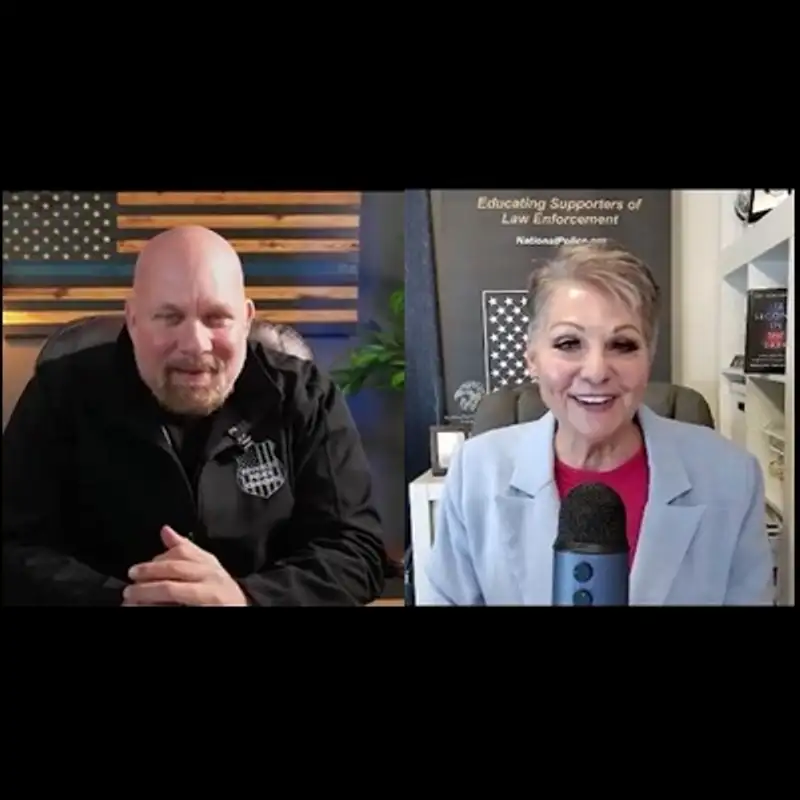
NPA Podcast with police Sgt. Jon Rappa, Interrogation Instructor, Author of Extracting the Truth
Hi. This is Sergeant Betsy Brantner Smith with the National Police Association, and this is the National Police Association Podcast. I have a guest today that I knew you had to meet because he is not only is he a current law enforcement officer, but he is traveling around the country speaking to law enforcement about interview and interrogation, and and he really, knows the ins and outs of how law enforcement officers can properly communicate with people, how they can, obtain, good quality confessions. And, and there's so many misconceptions around how cops do investigations and how they communicate and how they elicit, confessions and how they build a case against someone that I thought, let's go right to the source. So I've brought you sergeant sergeant John Rappa.
Betsy Smith:Welcome to the show.
Sgt. Jon Rappa:I Thank you.
Betsy Smith:I'm so excited, to have people meet you, because your experience is pretty incredible.
Sgt. Jon Rappa:I appreciate it.
Betsy Smith:So so let's get let's get right to it, and and I've gotta ask you what I ask every other law enforcement guest I have. Joe, why the heck did you become a cop?
Sgt. Jon Rappa:So it's crazy. You know, when I was a kid, my my stepfather, the man I I met my real dad when I was 14. So the man that I thought was my real father, he was he was killed during he was murdered during a robbery. And that kinda shaped, you know like that you that my my my you know without going into a sob story our entire life changed you know like overnight you know he had he was young he had no life insurance so you could imagine what a homemaker mother with three children had to go through and so shortly after that maybe a year or so later my mom ended up meeting a new guy and he was acted as a stepfather role in my life. Great guy sober, not so great when he drank and so crime affected my family in a very negative way.
Sgt. Jon Rappa:And so as I grew up, I just I knew at a young age because of my interactions with law enforcement, most of it was very good especially the detectives that worked my stepfather's case. And so most of my interactions with law enforcement because of the way crime affected my family was very positive. Now there were some negative interactions there, but the majority of it was good. And I I think I always had this thing in me where I wanted to help victims of crime because I knew what it was like. And I knew I I knew what it was like to have family members go through, you know, being a victim of a crime.
Sgt. Jon Rappa:And so I always you know, one of my favorite lines from the movie from from the movies is from Tombstone is justice is coming. And that's one of my favorite lines. And I it's just I've always felt that way. I always felt that I could do something for somebody that I I couldn't do for myself. I was a kid.
Sgt. Jon Rappa:There was nothing I couldn't solve a murder at at at 11 years old. Right? I I couldn't prevent certain things from going on in my household because I was just a kid. So as I got older, said, I I'm gonna do something about it for people who can't do it for themselves and was very passionate about it. And so I think no.
Sgt. Jon Rappa:I know that's why I got into law enforcement.
Betsy Smith:How did you begin to develop this interest in and this talent for interview and interrogation? Because Sure. Here's the thing. I so I came up, as a as a kid before I became a cop. You know?
Betsy Smith:I was a kid in the just the facts, ma'am kinda days. Right? You know? Drag dad and Adam 12 and all that. Where law enforcement officers, at least on TV, it was very straightforward.
Betsy Smith:Here's the bad guy. We're gonna tell the bad guy to confess. They do confess. Yeah. And and it all works out in the end, which is not how real life works.
Betsy Smith:No. No. How did you begin to develop that talent?
Sgt. Jon Rappa:So the long road. Before I became a police officer, I was a correctional officer, but prior to that, I worked loss prevention. And so initially, I was catching shoplifters. I was like 21 years old chasing shoplifters, such a fun job. But at some point I grew up, I matured a little bit and I became a key store investigator.
Sgt. Jon Rappa:I got promoted and they sent me to a a Wicklander Zulowski type course where I I because my new job was to investigate dishonest employees. And so I did. And so I went to the class, I I thought it was phenomenal. Think this is this is really cool stuff. I came back and I started conducting dishonest employee interviews.
Sgt. Jon Rappa:And I was successful and and I just I I felt I had a knack for it. The problem was the company I worked for was called Mervin's. They closed down like probably six months later. And so I always had the goal and a dream and a desire to become a law enforcement officer. So I went to the Department of Corrections first, did that for about four years, became a cop.
Sgt. Jon Rappa:And when I became a cop, I just I remembered, yeah, I knew what my ultimate goal was. And so I remembered some of the courses that I took. I took some additional classes. And somewhere around 2008, I joined a violent crimes unit. It was called the tactical impact unit.
Sgt. Jon Rappa:And our job was to go after violent criminals. So anybody who committed a shooting that night, anybody who committed an armed robbery, that was our job to go after those guys for the night. So we would do the investigations. When we weren't doing that at that time in our careers in that era there was a lot of street level drug dealing going on. So drugs and and and violence goes hand in hand, we all know this.
Sgt. Jon Rappa:And so we would go out and we would you know, we were like the jump out boys. Right? We would go out and we'd start looking for drug dealers and and so forth, but we didn't just arrest them. We brought everybody back to the box whether you had a dime rock or you had a pound of weed or a kilo, you're coming back to the box with us. And everybody has intel and that's one of our our rules on the team was everybody knew something.
Sgt. Jon Rappa:So every single night whether we were doing an actual robbery or violent crimes investigation following up on leads or we're just bringing people back in the box for intel, we had people in the box every night. And I wasn't that good at first. I was I was very average, made a lot of mistakes, but every single night after two, three, four years of doing that, the reps that we got, the operational reps were amazing and I felt very confident. Still needed work, didn't think I needed work, but still needed work. And then I got a few years later I went to the robbery homicide division.
Sgt. Jon Rappa:And when I did that I I you know I I really honed my skills over those years. I went in with the back the background of conducting interviews night after night, the operational reps I got was amazing. But to me it was a challenge. It was having somebody sit in front of you, nope nope I don't know nothing, I didn't do it, I didn't see nothing to okay this is what I saw. And I love the challenge you know and so to me, it was just it's you know, I've done so many different things in my career, but that's my favorite thing to do is just sitting down and having a conversation.
Sgt. Jon Rappa:I love talking to people, and and that's all that is. It's just is having a conversation with somebody. Victim, witness, or suspect.
Betsy Smith:And that that skill, you know, you can go to a training class. I went to that same training. And and but then you have to practice it. Right? Because otherwise,
Sgt. Jon Rappa:have to
Betsy Smith:lose it. And and plus, you come across people in law enforcement. Some people are really terrible liars. You know? Oh, yeah.
Betsy Smith:Yeah. Yeah. Kids are terrible liars. But, and by the way, all the stuff that you teach, parents works on your children.
Sgt. Jon Rappa:100%.
Betsy Smith:And but but there are there are criminals out there that are really good liars. Right?
Sgt. Jon Rappa:Sure. Absolutely. 100%. Hands down. There are some folks that, you know, all the things they teach you, Yeah.
Sgt. Jon Rappa:All the things that they teach you about you ask a specific question and liars are supposed to answer it this way. It's half of it, you know, again, studies show that we get deception right about 52% of the time. But it's amazing how you might ask somebody a question and they can lie to you like it's nothing and they're phenomenal at it, you know. And so I've witnessed that over the years time and time again.
Betsy Smith:Well, and you know, when we talk about the kind of training that you do, you know, interview and interrogation training, you think, oh, that's just for the the homicide guys or the robbery guys or whatever. But but a patrol officer, frankly, good interview and interrogation skills for patrol officer can save their lives. Right? Talk about that.
Sgt. Jon Rappa:I am so glad you said that because what is the one thing that patrol officers, all cops, but patrol officers do every single day, every day without fail. They talk to people every single day. And often times we get trained in interview and interrogation when it's time to become a detective. But what about the two, three, four, five years as a patrol officer where all you did was talk to victims, witnesses, suspects, suspicious people, people in the community all day long. You even just checking out with folks and doing citizen contacts.
Sgt. Jon Rappa:Right? Every single day, all day long and we very rarely get training outside of the academy. And so who do we get trained from? The guy who taught us or senior cops, senior detectives and some of them have no idea how to talk to folks. Some of them are great, but some of them you know they don't they they don't know how to talk to people or they're just not good interviewers.
Sgt. Jon Rappa:There's a difference between a good communicator and a good interviewer extracting information. Right? And so it's funny that you brought that up because I was teaching interview and interrogation for several years and I like to show my footage. I don't wanna pull stuff off the Internet. I wanna show, hey, this is what how you do it and let me show you what it looks like and I'm is me doing it.
Sgt. Jon Rappa:So I think there's some authenticity to it. Authent authenticity to it. And so one thing that I noticed was all of my footage was in the box and I have a bunch of patrol guys coming to my class and I'm just showing them in the box footage. So when I got promoted, my agency you get promoted they kick you back to the road. So when I first got promoted to corporal I left CID and went to road patrol.
Sgt. Jon Rappa:We have now we have body cams and and at that point we did. So I made it my mission to interview everybody, capture as much as I could when the case closed, get public records request and then put a class together just for row patrol officers. So now I have been teaching that for about two years, interview and interrogation for row patrol and starting July we should have a new class called mastering interview and interrogation for road patrol officers. So I teach them all now. I teach detectives and I teach specifically road patrol where we show body cam footage.
Sgt. Jon Rappa:We show them how to conduct a proper interview, how to talk to people, how to gather more information, encourage conversation, and then of course when it's time to get the truth, try to get the truth from somebody.
Betsy Smith:You know, think that's so incredibly important because for a lot of agencies, you know, because we we think about big agencies. Right? You know, New York, Chicago, Orlando, LA. But most police departments are less than 20 cops, and, and that patrol officer, you know, might be the one cop that's even gonna be involved in this case. Or even in a larger agency, if that initial responding police officer can elicit all that information that the detectives are later gonna need, you're so far ahead of the game.
Betsy Smith:Right? Especially now when nine out of every 10 police departments are so short staffed.
Sgt. Jon Rappa:Oh, so understaffed. Yeah. Yeah. You're you're a 100% right. So, you know, here's what I've learned.
Sgt. Jon Rappa:It's funny that you said that since I've been traveling, there are some agencies that are so small that they handle everything themselves. Right? They are the detectives. They are you know, there's I I taught an agency last week there were seven. The chief was in my class, there were six other cops for the entire agency.
Sgt. Jon Rappa:So naturally they are the detectives. Right? So everything that I'm teaching them is very applicable to everything that they do. And so you you'll get that. But sometimes you and so the very important for those guys because they are the patrol officers, they are the detectives.
Sgt. Jon Rappa:But even in the larger agencies just kind of touching up on what you just said, you know, are some agencies that are so large, patrol officer responds, takes a report, sends it and CID looks at everything. But give them a a giving them a present, give them a nice report wrapped up in a bow, give them some good interviews, some good, you know, interview footage that they could use to make their case better. Like you said, they're one step ahead of the game. And so that's I think why I'm so passionate about teaching what I teach because it's something that we do every single day, and I just think we should get more training outside of the academy so that we do it the right way.
Betsy Smith:Absolutely. And we and again, I think I think the public believes that, oh, cops come out of the academy pretty much having learned everything they're gonna need for the next twenty or thirty years, right, as a cop. And that would the only things we really practice are are firearms and defensive tactics and and things like that. When in reality, skills like interview and interrogation and report writing as well, how we, you know, how we present that information, are equally important skills that, I think a lot of times we don't spend enough time on in our careers improving. Am I wrong?
Sgt. Jon Rappa:Sure. No. You're you're you're absolutely correct. It's funny because you're right. They think that we go into the academy, come out and that's the end all be all.
Sgt. Jon Rappa:And it's not. And and I'm, you know, I'm just what you just said made me think. When I first became a detective, even after years of putting people in the box and having, you know, tons of interviews, interrogations under my belt, I still had so much more to learn. I was not where I needed to be even though I was successful. I've always said, I've always been successful at getting people to tell me the truth, but I was bad at getting information.
Sgt. Jon Rappa:I was horrible at obtaining information and this is years into my career as an investigator doing a little bit more research, kind of taking some more classes, watching some senior detectives, some good ones and then of course realizing what my flaws are. I had even after years of doing it and even when I was first instructing many years ago, I realized I became a student of of the game. I realized that my interviews relaxed tremendously and I needed to be better at extracting the information. Not necessarily getting a confession, but really getting information to make my case stronger. And halfway into my entire career is when I finally figured that out.
Betsy Smith:And now you go out and and, you travel around the country. You teach other police officers. How did you make that that leap? Because you're, you know, you're still on the job now. And, but how did you make that leap?
Betsy Smith:Because it's it's one thing to have, a lot of knowledge and a lot of skill, but quite frankly, most people would rather what's the old saying? Most people rather die in a fire than get up in front of other people, especially their peers, and Yeah. And and and teach. Talk about that transition.
Sgt. Jon Rappa:So, yeah, I've been very blessed. The owner of my company was my CID lieutenant, criminal investigations lieutenant for for criminal investigations. So he ran a robbery homicide division, and he was a robbery homicide detective prior to getting promoted to that. And so good guy, got along with him very well and he's the one who kind of brought me upstairs and and said, we'd like you to be part of the team. So I'm working investigations, I'm working, you know, I'm conducting my interviews.
Sgt. Jon Rappa:I'm doing my robbery homicide investigations. At one point, he comes to me and says, hey, I I wanna start a company, Advanced Police Concepts. He said, wanna start a company. I'd like you to teach it for me. So we we initially started teaching.
Sgt. Jon Rappa:I I taught some report writing. I taught some death and injury classes. I I and and I taught interview and interrogation. And so it's funny because it started off very small. We did make two or three courses the first year, right, towards the end of 2017.
Sgt. Jon Rappa:2018, I maybe taught, know, five or six classes and then something happened. I I switched solely to interview interrogation because that was my passion. Something that I I I always wanted to be good at when I was younger. When I was a younger cop. I I remember watching a guy when I was on the DEA task force, this kid could talk to anybody and he could you wanna talk about consent to searches of grow houses and and people would just they would tell him everything.
Sgt. Jon Rappa:And I just thought it was amazing. I said, why is? How does he connect with people so much? So I wanted to be that that that he's who I kind of emulated myself after initially. And so that was my passion, so I decided I'm just going to stick with interview and interrogation.
Sgt. Jon Rappa:And then we go from, you know, maybe, you know, six or seven classes a year, then it got to one class a month, and then the following year it would get to, okay, well I have I'm still a working detective at the time and and then I transitioned to patrol back to patrol when I got promoted. I can only teach a certain amount of classes. So we'll put some classes on hold for the following year. And then it got to the point where I'm doing two to three classes a month and now I can't breathe. And we're just so busy that you know I was like you know I just but the transition was amazing and so the company I teach for you know obviously I teach extracting the truth something I I kind of put together but the company I teach for he's he's done amazing things.
Sgt. Jon Rappa:We keep it in the family. My wife works for the company. She's the executive administrator so you know, she's putting all of you. Put the class through our company. You've talked to my wife.
Sgt. Jon Rappa:And it's just an amazing thing. And and now he's all over the country. He's got I don't know how many instructors he's got, maybe a dozen. And we're, know, we're we're all over the place, all kinds of different courses. But I ended up just sticking with interview and interrogation and really trying to make what I started in 2017, 2018, the course I had back then, make it better and make it, you know, the best class that I can make it.
Sgt. Jon Rappa:It is a completely different course than what I taught back then. I mean, you know, I we just really transformed it and and brought it into something that I'm really proud of.
Betsy Smith:When you talk about teaching something called extracting the truth, I think for a lot of people, what comes to mind is is a a dark interview room with a light bulb or you Sure. You know, a big tough cop grabbing somebody by the throat, you know, telling me what happened. Talk about the reality.
Sgt. Jon Rappa:Oh, the reality is is a relationship focused interview. I it's one of the first things I teach, new cops that are brand new like the patrol guys. I tell them what I'm about to show you because I show them videos of me shaking hands, I show them videos of me putting my hand on you know shoulders of of of victims witnesses and suspects. I show them building rapport and I tell them this doesn't make you soft at all. We have an end game.
Sgt. Jon Rappa:Our end game is to get better information from victims and witnesses and cooperations from criminal suspects. And studies show that you get more from developing a relationship with somebody than you do a confrontational exchange. So the old way of doing it of yelling at people, the light in the face, slamming, screaming at people, threatening to take their kids away, that's insane to me. It doesn't work. Maybe it does sometimes, but what works for me most of the time is just developing a relationship with somebody, treating people with respect, and having a conversation about anything other than the crime before we start talking about the crime.
Sgt. Jon Rappa:You know, and and that's the reality of it. It's not nothing sexy like Hollywood, you know. You took my video, any of my interviews, and you put it in a Hollywood movie, it would flop. It's not exciting, you know, but but it works and and that is that is the the public misconception. You know, we're, you know, of of of what they think we do as opposed to what a really good interview does.
Sgt. Jon Rappa:Don't get me wrong, I watch YouTube all the time. I watch these interview interrogations. I study them constantly. And sometimes I see some that are so egregious, kinda put my head down. I'm like, oh my god, stop yelling at the guy.
Sgt. Jon Rappa:You're getting nowhere. I've tried that at the beginning of my career. It's just not as effective.
Betsy Smith:How big of a factor in extracting the truth is body language?
Sgt. Jon Rappa:So, you know, it's funny. I I I used to teach, like, detecting deception and so forth. And and you realize over the years, the more studies that I do, it's not deception you're detecting, it's actually the stress, you know the stress caused by either what you've done or the stress of being interviewed by a cop or the stress caused caused by deception. So for me over the years, do I pay attention to body language? I do, but it's not it's not as important to me as just sitting down and having a conversation with somebody and extracting the information.
Sgt. Jon Rappa:For me, body language is huge out on the streets. Really paying attention to officer safety, seeing what's about to happen. Is he about to run? Am I about to get punched in the face? You know, is he about to reach for a weapon?
Sgt. Jon Rappa:Or and I love this. This is the one thing that I always, know, I I teach my trainees and my my new cops is, you know when you're when you're searching a vehicle right and maybe hypothetically do a canine sniff and we're going to search the vehicle. I always tell my guys position your driver of the vehicle so that he can watch the vehicle and watch you at the same time. And the closer that officer is to the actual contraband, you'll see the suspect stop and start watching. He's not going to talk to you anymore, he's going to start looking and you'll see that neck get higher and higher as we get closer to the contraband.
Sgt. Jon Rappa:That's body language. Right? And it works almost every time. And so, you know, I think for me the body language is more important on the streets in that aspect, more importantly than when I'm conducting my interview. I I I really don't pay attention to body language as much as I used to.
Sgt. Jon Rappa:I still do, but not as much as I used to. For me, it's just, you know, getting the information and just kinda structuring my interview so that I maximize the amount of information I get.
Betsy Smith:How do things like gender, the gender of the interviewer, the gender of the suspect, or age perhaps factor into, an interrogation?
Sgt. Jon Rappa:That's a great question. And and it absolutely can. I think it's preference of the person that you're interviewing. Some folks are not gonna connect with, the detective that's talking to them. Whether it's male, female, maybe the female doesn't wanna, speak to a man, especially a victim of sexual violence.
Sgt. Jon Rappa:Right? She may not be comfortable talking to a male, detective or vice versa. She might feel comfortable talking to a male detective. I think everybody's different. I think and here's what I what I tell a lot of my students is, you've got to learn to check your ego at the door.
Sgt. Jon Rappa:I know it's your case. I know you want to speak to that person, but if you don't connect with that person because they were female or because they're male or because of their age or their race or or what and you're just not connecting with that person, you're gonna realize it. You've gotta check your ego, walk away, and let somebody else do it because we're not gonna connect with everybody. It's just not gonna happen because those factors do exist.
Betsy Smith:Yeah. And I'm and I'm glad you said that because I've seen case after case after case where, you know, this detective is the detective assigned, and he he or she is the one who gonna see this thing through, and the interrogation falls apart, totally falls apart. And and I've seen it with victims as well. Because this is this is you're not just trying to get information from a suspect. You're also teaching skills on dealing with victims and getting information from them.
Betsy Smith:Correct?
Sgt. Jon Rappa:Oh, absolutely. Yeah. Yeah. No. I I teach victim witness and suspect interview.
Sgt. Jon Rappa:Absolutely hands down. And so the information that you get from a victim is paramount into solving that crime. The information you get from a witness is paramount. I mean, have reluctant witnesses. We have witnesses that sometimes don't wanna talk to the cops.
Sgt. Jon Rappa:You know, we have some that are very, you know, very not agreeable, but but really wanna work. They're very cooperative. And then sometimes we have overzealous witnesses that give you false information, not because they're trying to mislead you, just because they're so eager to help you out. So structuring your interview, your interrogation, learning to read that, learning to check your ego at the door, it's all paramount in making sure that at the end of the day, justice is coming for that victim.
Betsy Smith:Is it true that very often eyewitnesses are kind of the worst witnesses there?
Sgt. Jon Rappa:Absolutely horrible sometimes. We love them, don't get me wrong. We don't want to get rid of them. We need eyewitnesses, but you can't rely on eyewitness testimony alone. I'll tell you a crazy story.
Sgt. Jon Rappa:And then this has happened to me. I I always tell my students, this has happened to me at least half a dozen times in my career where I've had the wrong person in the box because of a bad show up or even a bad lineup. And so one that comes off the top of my head, I was on the violent crimes unit that I talked about earlier and we responded to a unarmed robbery that just occurred. And so this guy gets robbed at gunpoint right around the corner from a convenience store, high crime area. To this day, it's one of our worst parts of the city.
Sgt. Jon Rappa:Right? So it's always been high crime. And so we talked to him. We we we one of the patrol officers puts him in the vehicle. We at the same time as we're conducting that investigation, patrol officers stop somebody around the corner matching the description.
Sgt. Jon Rappa:You know what happens next, we do a show up. So they go, we do the show up, and sure enough, he says that's him. A 100%, that's him. That's the guy. That's our probable cause.
Sgt. Jon Rappa:So we bring him back to the scene, matches the description, wearing the same type of clothing. And sometimes the clothing is a little off, we know that. But for all intents and purposes, this is our guy and we got a, you know, a 100%. So we bring them back to the station. Fortunately, my police station was not far from that area.
Sgt. Jon Rappa:I'm So in the box, I'm talking to him and as I'm talking to him, he seems extremely believable. Some guys are great liars, so you know we don't take that at face value. But he gives me his alibi and I'm always gonna check up on the alibi. It's one thing that I teach my guys. You check your alibi as soon as possible.
Sgt. Jon Rappa:You don't want an innocent person in the box. If he's innocent, we get rid of him. If he's guilty, you check that alibi so you lock him down to the bad alibi. You do it as quick as possible. So he gives me his alibi.
Sgt. Jon Rappa:He says, I don't know what happened, man. He goes, I literally went to the store. I was getting ice cream because we were at home with my wife and daughter watching the Punisher and all of a sudden the cops come out and they take me into custody and then here I am. So I said hold on. So I left him with another investigator, I got my car, I literally drove down to his wife's house, knocked on the door.
Sgt. Jon Rappa:You never tell him what you know, right, you always play stupid because I want the narrative. So I said, hey, does so and so live here? She goes, yeah. Go, do you know where he's at? And he goes, no, he's supposed to be back.
Sgt. Jon Rappa:He went up to the store for ice cream. I go, what are you guys doing? She says, we're watching the Punisher. He literally laughed and I said, oh my god. And so I go back, of course, we are bringing him back to the station, you know, thank you for your cooperation.
Sgt. Jon Rappa:It's a time that sometimes it is a good idea to talk to the cops. And then we go back and re interview the victim. The victim says, well, know, it could have been him. I don't know. I he was dark maybe 50 to 60%.
Sgt. Jon Rappa:So it went from a 100 to 50 to 60%, you know, and and you realize that sometimes witnesses are very very bad and and it's not because they're trying to mislead you, it's they're so overzealous sometimes to get the right guy and sometimes memory is flawed. One more story, I worked loss prevention. I got in a fight with a guy bringing him back to this loss prevention office trying. He got away from me, scratched me up. We were face to face fighting.
Sgt. Jon Rappa:I watched the surveillance footage. I don't know how many times police officer comes in, a detective comes in a couple days later to show me a lineup. I couldn't pick him out. I was so embarrassed. You know, I'm young.
Sgt. Jon Rappa:Said before I was a cop and I was like, I was embarrassed. I said, I I don't know. I think it's him. In the back of my mind, I'm like, but I fought him. I saw him face to face.
Sgt. Jon Rappa:I've watched him on surveillance footage a dozen times. I prepared for this and I couldn't pick out the right guy. And so memories are flawed. Right? Where we see things differently.
Sgt. Jon Rappa:So eyewitness testimony is very important, but it can never be the end all be all. You have to have other things.
Betsy Smith:Last question. Give me your thoughts on the use of the polygraph.
Sgt. Jon Rappa:Oh, I wanna make some people mad here. I am not a I am not I think it's a good tool. Do I think it's a 100% accurate? No. I've I've had some bad experiences with putting suspects on the polygraph, chasing the wrong suspect for months because of a failed polygraph.
Sgt. Jon Rappa:And I myself tried to get a job. I remember telling the truth and I don't know if the investigator did it because he was trying to get me to tell a little bit more. I don't know. But I remember, you know, being asked a question in the back of my mind. I'm like, no.
Sgt. Jon Rappa:That's completely false. I did not lie about that question. But I'm being pressed. I'm being pressed. And so I don't know, man.
Sgt. Jon Rappa:I'm I'm just not I'm not sold on it a 100%. I I I I think it's a good tool. And, Tony, we talk about the wrong person being in the box sometimes from bad IDs. Another story I tell in my class a lot was a guy named Steven. Steven was was was falsely identified in a photo lineup.
Sgt. Jon Rappa:He looked just like the guy. Somebody thought it was him. I put him in a lineup and he circled him. We had him in the box. And man this guy had a sharp alibis, he was so honest with me and I said I don't think he shot this.
Sgt. Jon Rappa:I I don't think he was a shooter. And so we put him on a polygraph test a couple days later and he passed. And so I started looking into the right guy, eventually the right guy came and all the evidence was overwhelming, we got the right guy. But it would that that was the time where the polygraph works. So is it a 100% flawed?
Sgt. Jon Rappa:No. I I think it's a tool of just something that I'm not a a big fan of, if you will. I'm gonna piss some people off. And I I agree with you.
Betsy Smith:Right? Your language, it is a tool. It's a tool. It is not the the end all be all. But, you know, in infamous cases, you know, in the media, you know, people are always like, well, put them on the polygraph.
Betsy Smith:And and, yeah, I share your assessment that it's it can be a good tool, but it it it will never be the end all be all
Sgt. Jon Rappa:Sure. Yeah. Absolutely.
Betsy Smith:When it comes to extracting the truth, if you will.
Sgt. Jon Rappa:Yeah. Yeah.
Betsy Smith:I'll tell you, Sarge, I have about a thousand more questions. I'm gonna have to have you back at some point. But, tell everybody where they can find you, your social media, your website, all that kind of stuff.
Sgt. Jon Rappa:Love to. So I teach with advanced police concepts. We teach interview and interrogation. The course is extracting the truth. We have several different interview and interrogation courses, some designed for patrols, some for everybody.
Sgt. Jon Rappa:I have my own so you can reach that at advancedpoliceconcepts.com. I have my own website that talks a little bit about my course. It's extractingthetruth.com. I have a book on Amazon called Extracting the Truth. You can find it there.
Sgt. Jon Rappa:And I also also have various social media profiles. I have a YouTube channel called the law maniac, like the law man, but e ack at the end. I have a TikTok channel where I put a lot of training videos out called the law maniac. You can find us on Facebook at advanced police concepts. You can find us on Instagram at Advanced Police Concepts, and I think we've covered it.
Sgt. Jon Rappa:And LinkedIn, of course, John Rappa. I'm on LinkedIn. I'm very very proactive on LinkedIn. I'll put a lot of training videos out there, and I I love getting interactive with folks on LinkedIn. So it's John Rappa on LinkedIn.
Sgt. Jon Rappa:So I think I've covered most of them.
Betsy Smith:Well, I'll tell you. I I want everybody to to seek you out, seek out one or more of your channels, seek out your book, seek out your training, because I think that, I just I have a feeling you're gonna be pretty legendary, in the future. Your training is is phenomenal, and so are your writing.
Sgt. Jon Rappa:Appreciate it.
Betsy Smith:And, and I can't thank you enough for, spending time with us today. And if you'd like to know more information about the National Police Association, you can visit us at nationalpolice.org.
Narrator:Every day, the brave men and women of law enforcement put their lives on the line to keep us safe, but they need our help to continue their mission. Activist politicians, progressive prosecutors, the ACLU, and the rest of the anti police forces receive millions in donations from extremist pro criminal elements like George Soros and woke corporations. The National Police Association is fighting them in courts around the country, including the United States Supreme Court defending officers who are being attacked for doing their jobs. Additionally, the National Police Association works year round to pass tough on crime legislation to put and keep criminals behind bars. Consider going to nationalpolice.org and donating to keep us in the fight.
Narrator:Together, we can win. That is nationalpolice.org.