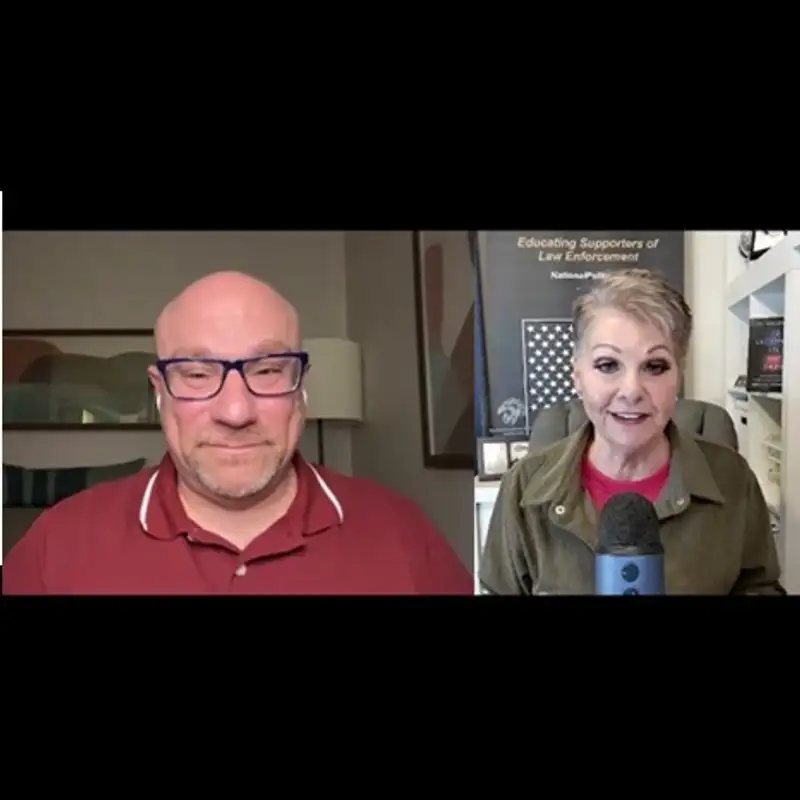
NPA Podcast with Joseph Giacalone, NYPD Sergeant (Ret), Host of True Crime with the Sarge Podcast
Hi. This is Sergeant Betsy Brantner Smith from the National Police Association, and this is the National Police Association Podcast. I have a guest today that I knew you would all want to meet. He has a fascinating background during his law enforcement career, and then I think he's busier now in, quote, unquote, retirement. He's he's like me.
Betsy Smith:He's completely failed at retirement. And he's just everywhere talking about crime, talking about homicide, talking about cold cases, and, I have about a 150 questions for him, because he is such a fascinating guy. Joe Giacalone, welcome to the show.
Joseph Giacalone:Hey, Betsy. Thanks for having me.
Betsy Smith:So, Sarge, first of all, I have to ask everybody who comes on the show who is in law enforcement. Why'd you become a cop?
Joseph Giacalone:Well, I mean, it's a short and long story all in itself. I actually I wanted to be a part I wanted to join the fire department. My godfather was a fireman, he had you know, I was a kid. He took me to see you in the city, all the trucks. So that was that was my gig, and I think my parents would have bet the house that I would have done that.
Joseph Giacalone:But when the time came to take the test, the fire department wasn't hiring. So I decided to take the police test because of the time you could lateral over. And, you know, you'd say you start with the police department. Maybe two years down the road, you can, you know, you know, join the fire department. Well, I ended up after about three years.
Joseph Giacalone:I passed the sergeant's exam, and I was gonna get promoted probably within two years or so. So I figured, you know what? I might as just stick it out, and, the rest they say is kinda history.
Betsy Smith:So sergeant, best job in the agency, don't you think?
Joseph Giacalone:Absolutely. I mean, it's almost well, actually, you know, your lieutenant might be a little better. Right? Because they lieutenant is like the elevator operator. Don't wanna do it.
Joseph Giacalone:Push it down to the sergeant. Don't wanna do it. Push it up to the captain. So yeah. I mean, listen, the sergeant, the first line supervisor, talk about getting your hands dirty and making decisions, on the spot.
Joseph Giacalone:If So that's what you're into, that's definitely the way to be.
Betsy Smith:Yeah. I'm married to a lieutenant. I'm gonna use that on him. So so you ended up I mean, you've you've done so many things, but you ultimately ended up running the cold case or a cold case homicide squad. Is that correct?
Joseph Giacalone:Right. Yeah. The Bronx Cold Case Squad. So there was three supervisors. And if anybody doesn't know, New York City's got five counties.
Joseph Giacalone:So we were three supervisors for five counties, so I ended up, you know, covering parts of Brooklyn and sometimes Manhattan and Queens. And and we actually didn't make much out of Staten Island, but, yeah, just in case we had to go there too. But, yeah, it was the best job that I ever had in the police department, and, some of the greatest detectives in the world actually will work in those cases.
Betsy Smith:When does a case become, quote, unquote, cold? What's the criteria?
Joseph Giacalone:Well, in New York City, it it went by when there weren't any more viable leads. That that coulda happened in a month. It coulda happened in two years, whatever it may be. But, unfortunately, during the eighties and nineties when the New York City had the crack epidemic and all the other stuff going on, I mean, think it was '94. They had nearly 2,300 homicides.
Joseph Giacalone:That's when the cases really started piling up, and the detectives didn't have, you know, time to work on them. And, unfortunately, some cases slipped through the cracks. You know, you you would go into a record room, and you'd see, you know, huge boxes, you know, for one case, and you knew that was a special case. And those are the kind of things we kinda went towards.
Betsy Smith:Running a team like that, what was it like when you were able to solve a long standing cold case, especially when there were living relatives, living family members? Talk about what that's like.
Joseph Giacalone:Yeah. It's it's kind of really exciting. It's it's tough to kinda even put an emotion on it, but it it is something that really is adrenaline run. Like I said before, the detectives were absolutely unbelievable. I mean, these guys could find anything under a rock.
Joseph Giacalone:And, unfortunately, you couldn't make a 100 of them and say, hey. Let's go out and do all these cases. But the you know, you had some situations where these cases sat for so long and these guys would just, you know, work miracles. And, yes, DNA became a big focus on a lot of these cases. But even then, the skills of be able to, you know, get this case prosecuted in what we used to affectionately call the People's Republic Of The Bronx was also an art form.
Betsy Smith:Absolutely. And when you're when you're working cold cases, you don't wanna just solve them and say, okay. We've got a bad guy. There you then you prepare for prosecution, which can be really daunting when a lot of time has passed. Correct?
Joseph Giacalone:Absolutely. I said so the way we had to do it was we would even if we established probable cause, we still couldn't make the arrest. We'd have to then go to the district attorney's office and basically plead our case to the case that we've had. And a lot of times, they would just say, well, it's not enough for, you know what, get me the pope and three nuns as witnesses, and then maybe we can talk. Or, alright.
Joseph Giacalone:You have his DNA, but you know what? You ain't gonna need to bring him in now and and make him confess. You know? So they always kinda put obstacles in front of you. If I was doing this today, one of the things that I would be trying to get up the ladder would be to try to create this cold case task force where you had the district attorneys working directly with you because it often became a, okay.
Joseph Giacalone:I don't have time for this, so I'm just gonna give this guy 10 things to do, which is gonna take him six months. You know? Alright. Goodbye. See you later.
Joseph Giacalone:And, unfortunately, that kind of way is not really conducive to these kind of cases.
Betsy Smith:You know, I wanna dig a little deeper into that because I think one of the things people don't really understand is the prosecutor's role in a in a detective's life. You know, we we you know, on television, right, the cops go in there with, you know, their case, and they hand it over, the prosecutor just says, oh, great. Let's go to court. Talk you know, you talked about it a little. Delve into the realities of dealing with the prosecutor's office when you're a detective.
Joseph Giacalone:Yeah. It's frustrating beyond belief. So you could spend so the detective can work this case, spend every waking moment on it, and finally figure it out, and be able to get the evidence to match up with it, and then bring it to the district attorney's office only to be told, now it's not good enough. So one of the traits that you look for in in choosing cold case investigators is that they they basically, people who refuse to give up. Right?
Joseph Giacalone:I would say my wife would be great at this because her only answers to her questions are yes or yes. Right? There are no noes. You have to find people like that because you you deal with this frustration every day, whether it's not being able to find a case or then when you prepare your case and having the district attorney tell you flat out. And this is a true story, but I won't tell you which case, but flat out tell us that that she didn't see a nexus on a case that we had four DNA hits and seven sexual assaults.
Joseph Giacalone:So, you know, that's the kind of thing that you deal with sometimes. You just wanna, like, reach across the table and just go crazy. But you have to remain calm, and and sometimes you have to push buttons too in order to get your you know, the the sometimes get these cases done. So, yes, it is extremely frustrating, and that's why I think a better model would be to working in tandem to try to get these things done. This way, you know exactly as the investigator or the supervisor knows exactly what is expected to get done.
Joseph Giacalone:Not that I'm gonna do this, and then three months later, you're gonna tell me, okay. You did that. Here's another five things to do. Right? And that's unfortunately what happens.
Betsy Smith:Absolutely. So you have this storied career with the NYPD, and you you retired. You were pretty young when you retired. How come you did how come you're not just sitting by a pool in Florida?
Joseph Giacalone:Yeah. Like, I actually, I like your saying there. Like, I failed at retirement because I actually did. I was always I was already teaching too. I was a I'm I was an adjunct at John Jay College.
Joseph Giacalone:Actually, I'm still teaching there. It's been over twenty years now. And I don't I just I I'm not the one to sit and let, like, guess, dust grow under my feet. But I this actually op you know, gives me the opportunity to do some things that maybe I just wanna do. Right?
Joseph Giacalone:So whether it was writing books or teaching classes or starting a podcast, you know, those are all the kind of things that, you know, Joe wanted to do, so to speak. So and that's that's the kind of thing that I did. And you know what? Like everything else, you get lucky sometimes. Right?
Joseph Giacalone:You're at the right place at the right time, or you speak to the right person. And I had a lot of help along the way. That's And always the thing, and that's one of the things that I always try to do is I try to help out, you know, retiring law enforcement officers who wanna get into the media field, who wanna do these things. And I just kinda feed them some of the things that I no longer wanna do because as I'm getting older now, it it's it becomes a job. Right?
Joseph Giacalone:And then when it becomes a job, it's not fun anymore. So you have to, you know, consider that aspect of it all too.
Betsy Smith:So let's talk about the podcast. You know? Because, again, right now, everyone, including my youngest adult child, is obsessed with true crime. You know? She didn't give a damn when I was a cop for twenty nine years, but now that's all she wants to listen to is true crime, true crime podcast.
Betsy Smith:Why are people so fascinated with that stuff,
Joseph Giacalone:you think? I think it's always been that way. Right? I mean, if you saw, like, over the last couple of decades with TV shows like CSI Miami and all those other things that came up, I just think that it's part of the human experience to try to figure out or understand why people do terrible things to other people because most of us can't understand why somebody would do that. So getting into the psychology part of it, the investigative things about how detectives go about doing their jobs, I think, is extremely interesting.
Joseph Giacalone:And it it's also the fact that there's a sense of justice to it. A lot of people like to see the good guys win. Right? I know over the last few years, we've been painted not as such good guys, but, you know, they when the day is over, we're still the good guys. And I think that's, also part of it.
Betsy Smith:So how did you decide to start doing this, to start podcasting, to start talking to people about some really difficult cases?
Joseph Giacalone:Well, to be honest with you, so when I I actually wanted to start this, like, ten years ago instead of only a couple years ago, but I was discouraged to do so. Like, say, listen. Nobody's gonna wanna listen. Nobody's gonna wanna do this. And, you know, what do you know?
Joseph Giacalone:There's people out there with more experience, and all that stuff is true. Right? There are people out there with more experience and more cases and more, you know, dealt more homicides and more crime scenes. Of course, there's always that aspect of it. But I came from a different position and respect that not only had I done the practical side of it, but I've I've written textbooks on it.
Joseph Giacalone:And then I I I seem to fall into the media thing pretty well. So I had that exposure out there where people kind of, you know, saw me on TV, and then you they say, oh, okay. I saw this guy on CNN or Fox News or what have you. And then all oh, he's got a podcast too. So I think that's that has helped.
Joseph Giacalone:So I started True Crime with the Sarge a couple of years ago, and now I've expanded it to not only the YouTube live shows, but I've also now have a strict audio podcast where I do never heard before interviews with people, and I make them strictly an audio podcast because people, you know, say, hey. I, you know, I listened to your YouTube shows, you know, while I'm driving in the car, but you know what would be great? Even more so just a strict audio podcast. So I went that route. Right?
Joseph Giacalone:You listen to what the people tell you that they wanna hear or see, and and you you get lucky that way.
Betsy Smith:Yeah. Absolutely. And and, you know, it seems like in the last two or three years, you know, we we we see even though crime is going down, but we see some really horrific violent crime all around the country, you know, whether it's in big city areas, in in rural areas, and things like that. And and, you're not afraid to talk about any of that.
Joseph Giacalone:No. I I'm not. And I I don't pull any punches either. So what do I mean by that? Well, if the cops do a great job, I say, hey.
Joseph Giacalone:The cops did a great job. The cops did a bad job. I say, the cops did a bad job. Right? And we can start picking out cases like that in in in recent memory where you say to yourself, well, mean, leadership screwed up on this big time.
Joseph Giacalone:Or you know what? This this should have been done. Why wasn't that done? And then it all kinds of falls on supervisors, at the time because, wait. This is your case.
Joseph Giacalone:What were you thinking kind of thing? So it's it's important to be on both sides of the aisle. Right? Not just pro one side or anti one other side because people don't wanna hear that. And, actually, I get a lot of things where people say it's actually a breath of fresh air when you actually say, hey.
Joseph Giacalone:Listen. This could have been done better. And, you know, listen. As you know, Betsy, in this arena, you always piss off somebody. Meaning, if you say the cops did good, the people who hate the cops come after you.
Joseph Giacalone:If you say the cops did bad, the people on the who hate the cops say, great job, and the cops are saying, what are you doing? So you can't win, and I just threw that out there and say, no matter what I say, I'm always gonna upset one group, but that doesn't matter because it needs to get out. It needs to be able to be put out there, especially when it comes to officer involved shootings. I think I've spent I couldn't tell you how many years trying to explain people just the basics and things like, you know, Graham versus Conner or Tennessee versus Conner. And, you know, the whole thing about the medical examiner, you know, when every time there's a police involved shooting and they would ramp up the oh my god.
Joseph Giacalone:The medical examiner said it's a homicide. And I'm like, yeah. No kidding. There's no other classification it could be. So that was like, alright, Joe.
Joseph Giacalone:Throw it out there. So every time there would be a shooting and I would just write a tweet out or a Facebook post and say, just to avoid all the confusion tomorrow morning, the medical examiner is going to say this is a homicide. You know? That's it. And sometimes it works, you know, because people just like, well, how did you know?
Joseph Giacalone:It's not natural. It's not accident. It's not suicide. There's only one left.
Betsy Smith:You're absolutely right. People misunderstand, the language that we use, the the language in the legal system. Again and I I guess you've gotta you've gotta chuck that up to, again, the TV shows that they watch and and things like that. And, again, especially in the last five years, but even in the last ten, fifteen years, this ramped up hatred of the American law enforcement officer, by certain factions in society, they too like to jump on words like homicide and things like that when you're talking about an officer involved shooting. And and and that's one of the things I I'm gonna veer off just a little bit, and then I'll come back.
Betsy Smith:But, you know, you you were a a member of, one of the probably the most famous police department in the nation, if not in the world. And, the NYPD has really taken it on the chin in the last, ten to fifteen years, you know, just from a public relations standpoint and now from a, you know, just a shortage of personnel standpoint. Now that you're on the outside looking in, what do you see as the future for the NYPD?
Joseph Giacalone:Yeah. Unfortunately, I don't I don't have much optimistic about what's going on. And it's the reason is and it's just in this part here is not just NYPD, but it's all police departments that are urban environments. Right? We see the counties doing pretty good.
Joseph Giacalone:But the urban cities, you know, New York, Chicago, and Miami, and they have a problem with recruitment and retention. And as this goes further and further on, we're going to see less good things. Let's put it let's put it that way. Right? Because we don't wanna say, you know, beat so negative.
Joseph Giacalone:But the issue that comes down to is as police departments like the NYPD are shrinking in size, there's no way that you can handle the amount of jobs that they do on a daily basis. I mean, you're looking about a city about 9,000,000 people, and it's and it's pretty big when you think about it. It's not people think, like, New York City is just Manhattan. Right? You know, they forget about all the outer boroughs, and it is huge.
Joseph Giacalone:And the issue that comes down to is response times go up. You have, you know, political situations that are just like you kinda just scratch your head, you know, things like diaphragm laws and and removing qualified immunity and, you know, all these things go against the police department. Right? Where they you you handcuff them literally from doing their job, and it makes it 10 times difficult. So when greener pastures arrive on their doorstep, hey.
Joseph Giacalone:Come to Florida. Hey. Come to here. They're out the door. And it's I I I don't blame them.
Joseph Giacalone:I mean, I used to tell my students, hey. Listen. The NYPD is a great, you know, job. This and that. I I have a very difficult time selling that anymore.
Joseph Giacalone:And and it's unfortunate because as I see what's going on with this department, especially in the last, I would say, the last eight years have been really, really bad, and and difficult. And listen. You start dropping your qualifications to become a police officer. You become a a self fulfilling prophecy where the people who hate the cops that, you know, wanted to defund the police, and then cops defunded themselves, which was something I predicted. And then they hire people that should have never been hired in the first place.
Joseph Giacalone:We elect people who should never been elected in the first place. And when things go bad, they turn around and say, see, look how bad the cops are. And it's like to me, it's frustrating because they don't understand that this was by design some of these things and not by, like, luck or bad luck. It was designed to do this way, and it's and it's working out perfectly in their favor.
Betsy Smith:What do you tell your students who come? Because I know some some young people come to a a class, you know, a criminal justice class or a death investigation class or whatever just because they're interested. But some come, a lot come with a real genuine interest in getting an education and then serving in law enforcement. What do you tell them? Where do you tell them to go?
Betsy Smith:What do you tell them to look at these days?
Joseph Giacalone:Well, I always thought of positive. I was like, if your dream was ever to be a law enforcement officer, you know, whether it's a local county cop, city cop, whatever it may be, this is probably the greatest opportunity that you will have in the next twenty years because police departments are hurting so much for people. They're actually offering some major incentives, and we're starting to see salaries even going up even in places like New York City because why? They they have to realize that if they don't do something soon, it's going to become catastrophic. So if you have that idea in your head or there's a push or a drive that says this is what you wanna do, you are in a great spot.
Joseph Giacalone:And the thing is, like, I I tell my students kiddingly, I said, well, listen. When you go to the prom or you when you're in high school, whatever, you were gonna pick a a girl or a guy to go to the prom, you pick the best looking one there. Right? So sometimes you have to take a hard look at some of these police departments because some of them are side chicks, you know, so to speak, where you you gotta go for another county job first or the state police first. And then you know what?
Joseph Giacalone:If none of this works, well, I could always date the NYPD or, you know, another major city. That's that's basically the way you have to look at it. You're in the kind of driver seat so far. And I was telling, like, you know, even I believe it was the New York State Police who are offering if, females. They were offering them, like, five points on the test, you know, for a civil service exam.
Joseph Giacalone:I'm like, ladies, if this is what you wanna do, you know what, five points in a civil service exam? You're talking jumping thousands of names. So, you know, go for those things. I if they're offering it, you gotta take it. And it's just that's just part of it.
Joseph Giacalone:And a lot of times these kids, they wanna do things, but they don't know where to look. So when I hear about a good job or something like that, I I'll post it on the on our, you know, Brightspace page or something. Like I say, hey. Listen. New Jersey State Police is hiring.
Joseph Giacalone:You know, I know some don't wanna leave mom and dad because they don't wanna leave New York. That's fine. But New York State's hiring. National Suffolk County, if they give a job again, you know, those are the kind of things you go for first, and you you take it from there, so to speak.
Betsy Smith:Yeah. I'm glad I'm glad you said that because I know when when I got on the job and when you got on the job, you know, we'd apply and there'd be, you know, literally thousands of candidates, you know, for a couple of jobs. And and now that's really flip flopped, And and and I agree, and I tell young people the same thing is be picky about where you even bother to apply and think about not just opportunities for advancement, but think about where you'd wanna raise a family. Think about the weather. You know, I patrolled in the Chicago Metro Area in 60 below wind chill.
Betsy Smith:Now I if I had that to do over, I might have started my career in Florida or Arizona, someplace where the temperatures weren't quite like that. And so, yeah, it's a good idea to tell tell these kids to kinda be picky, right, and and think about where you wanna be on the long term. I wanna switch gears again because, you know, as you know, I live in Pima County, Arizona, so I'm in Nancy Guthrie land. And and, you know, she's been missing for several months now. And I talked to so many people who think that she's one of maybe five people missing in the in the whole country, which is extraordinary to me.
Betsy Smith:I want I want you to talk about the national, missing, and what is it? National Missing and Unidentified Persons System database? Explain to
Joseph Giacalone:me both. Yeah. NamUs.
Betsy Smith:Yes. Explain to me what that is and why we need something like that and how law enforcement accesses it.
Joseph Giacalone:Right. So NamUs is the National Missing Unidentified Persons System. It's designed to collect all the data on people who are a missing or where you find unidentified human remains and they get cataloged in it. It's the only system of this kind that allows not only the police, but the medical examiners and coroners, but also the public to access and input data. And it's a it's a wonderful program, and it's underutilized.
Joseph Giacalone:There's only I think it's 16 states that are mandated to use it, which to me is absolutely mind boggling because, you like, New York has is mandated to use it. So you have so many cases of unidentified human remains that you find every year in the state of New York, and it's a great place to put it in because the idea behind it is if I put human remains in this system in from New York and somebody from California, you know, some you know, their family submits the DNA into the system because their family members missing the ideas be able to marry these two together. Because a lot of times, you have people that are unclaimed and somebody's looking for them another state, but the systems aren't talking to one another. So it's important that every state does this. I think Ohio is trying to become the seventeenth state now to do it through through legislation, which to me is mind boggling that we need to be legislated to do this.
Joseph Giacalone:And to me, it's it's kind of a part of the job, but there's other problems with it. And in respect of, for instance, when I was doing cold cases, this was relatively new at the time. But now I see a huge problem where, as you know, people retire, people quit, people get fired, people pass away, all these things happen. Are they going back into the database and updating the contact information for all their cases that they had? You know, are they given the new detectives information?
Joseph Giacalone:Are they you know, what are they doing about that? Because if they get a hit, they don't know who to call. And, you know, as well, they they call it you know, the we call the telephone switchboard operator because that's how old I am. You would get, you know, who, what, where? I don't know what case.
Joseph Giacalone:What's what precinct? We got 76 of them. You know what mean? And that's there therein lies your problem. So there's it's just not inputting stuff into it.
Joseph Giacalone:It's about maintaining it. It's about updating it. But it's a great system, and they passed legislation a couple years ago to integrate it with NCIC. So you have a kind of basically a double whammy here. Right?
Joseph Giacalone:Because, you know, NCIC has all the law enforcement databases and searches and missing persons and all the other warrants and you name it. And they were going to marry these two, but it's kind of been slow because, I guess, they're reluctant to bring this outside program that was developed outside of the venue of the FBI and then integrate it. I guess I can understand that maybe there's possible security issues. But if they can't figure that out, well, at least get everybody on board to use this.
Betsy Smith:And I'm glad you you brought this up because, again, thanks to television, and movies, people think that there's just one big law enforcement database for all the information that we need, you know, as investigators, as law enforcement officers, and it all pops up in our computers sitting in front of us or in the car. And nothing could be further from the truth. Right?
Joseph Giacalone:Absolutely. Yes. There's no magic button that you push and, you know, things pop up in the mid air. You know, that doesn't happen. And you don't solve a forty year old case with you know, in forty five minutes with three commercials.
Joseph Giacalone:That doesn't happen either. But the idea is, you know and I I throw numbers out there sometimes. I said if every state, every police department, you know, nearly 18,000 agencies went online and inputted their missing person's data into NamUs, I guarantee they could probably close 10 or 15% of cases overnight just because, you know, some small police department in, let's just say, Arizona. They input they found somebody in the desert. They input it in there, and then all of a sudden, you know, Wisconsin gets to hit.
Joseph Giacalone:So, I mean, it's just it it could be as simple as that. And, unfortunately, families are waiting for answers, and these agencies aren't talking to one another You know? I mean, we listen. In 2026, we should be way beyond ORI numbers. I mean, at this point, you're like, come on, guys.
Betsy Smith:Yeah. You're you're absolutely right. I wanna talk about one of the other things that you do is that I find really fascinating. You you and explain it to me. You get involved in these sort of true crime events, things like that.
Betsy Smith:Again, these are wildly popular because people love this stuff. And, because there's so many people out there, as we found with the Guthrie case, there's a lot of civilians who really have opinions about how law enforcement works, how to work cases, how to find clues, things like that. Talk about that.
Joseph Giacalone:Yeah. So I've been invited, four times to speak at the national the Crime Con, festivals or conferences, however you wanna refer to them. So I've been to New Orleans, Chicago, Orlando, and, Nashville. You know, those are a lot of fun, but they're huge. Right?
Joseph Giacalone:So, I mean, you you if somebody has has any interest in this and if you've never been to one of these things, you have to go to experience it because it's absolutely wild. And you get up on stage. So for a a couple years ago, and I believe it was in Orlando, I was I was working with the Lauren Crime Network, and we put on a Long Island serial killer show right after Rex Yurman, the alleged killer, was arrested. And we we did this whole big thing on that because growing up on Long Island, this case was in my backyard. I followed it from the minute and and was was really on top of things.
Joseph Giacalone:And, you know, it's a lot of fun. You get a chance to meet people out there. Plus, you know, having written two textbooks, that that's another draw for them too. So they because they do book signings and all the other stuff. And now I also part of this thing called the Hamptons Whodunit, which is at East Hampton, Long Island, which is in if you get people that don't know, it's a very nice part of Long Island.
Betsy Smith:Oh, yes.
Joseph Giacalone:And, yeah, then we're we're coming up to the fourth annual one in a couple of weeks. And that one too, it's it's a much smaller venue, and people get a chance to sit and talk with you and ask you questions. We do this coffee and crime thing for, like, an hour where we start we stay at at one of the local coffee shops. And, you know, I bring in other friends and guests that are there, and people sit, and they can just pick your brain and just get a chance to talk over a cup of coffee. It's it's actually a it's actually a lot of fun.
Joseph Giacalone:It's it's unique in so many different ways.
Betsy Smith:I love it. Well, Sarge, you are, you know, you're a legend. And now in retirement, you're doing so many cool things that I really want people to pay attention to and to appreciate. So tell everybody where they can find you, your website, where they can find the books, all of that.
Joseph Giacalone:Sure. So my website is josephgiacalone.com. My podcast on YouTube is true crime with the sarge, and the audio podcast, if you wanna find it, it's on Spotify and iHeart and Apple, of course. That's true crime with the sarge, the audio files. That's that's the only way I can come up with a difference of the two.
Joseph Giacalone:And as I said, I've written two books. Both have been published by Blue three sixty Media, the Cold Case Handbook in its second edition, and the Criminal Investigator Function, a Guide for New Investigators, which is the fourth edition, which I've been threatening to send sheriff Nanos a copy, but I haven't had the goal to do that yet. Anyway, I just had to throw that
Betsy Smith:in there. I'll put down my credit card for it. I'll hand over it.
Joseph Giacalone:Yeah. I mean so, I mean, I've been busy. So like I said, I'm I'm I'll be at a couple I'm doing a fundraising in Horsham, Pennsylvania for students who wanna take forensics classes over the summer, like a camp kind of thing. So there's going to be a bunch of us coming together. We get you know, we don't get, of course, get paid for it.
Joseph Giacalone:We go there on our own time. We sit there. We talk to the kids, and hopefully, will donate money so that these kids can go to the camp during the summertime. You know? And all they do is forensics.
Joseph Giacalone:They they learn how to do fingerprint s and all. It's it's actually kinda cool. So, you know, I I get I'm I'm fortunate to have the opportunity to do stuff like that. And sometimes I just shake my head and say, how did I end up here? Right?
Joseph Giacalone:How did I end up even end up in this spot to be able to do this? But it's it's actually a good it's actually a good feeling sometimes where you can actually help these kids that really wanna do it.
Betsy Smith:Well, Sarge, you are a wealth of information, and you're a really great role model for young people. I hope you keep at it for a long time to come, and I can't thank you enough for spending time with us today. And if you'd like more information about the National Police Association, you can visit us at nationalpolice.org.
Narrator:Every day, the brave men and women of law enforcement put their lives on the line to keep us safe but they need our help to continue their mission. Activist politicians, progressive prosecutors, the ACLU and the rest of the anti police forces receive millions in donations from extremist pro criminal elements like George Soros and woke corporations. The National Police Association is fighting them in courts around the country including the United States Supreme Court defending officers who are being attacked for doing their jobs. Additionally, the National Police Association works year round to pass tough on crime legislation to put and keep criminals behind bars. Consider going to nationalpolice.org and donating to keep us in the fight.
Narrator:Together, we can win. That is nationalpolice.org.