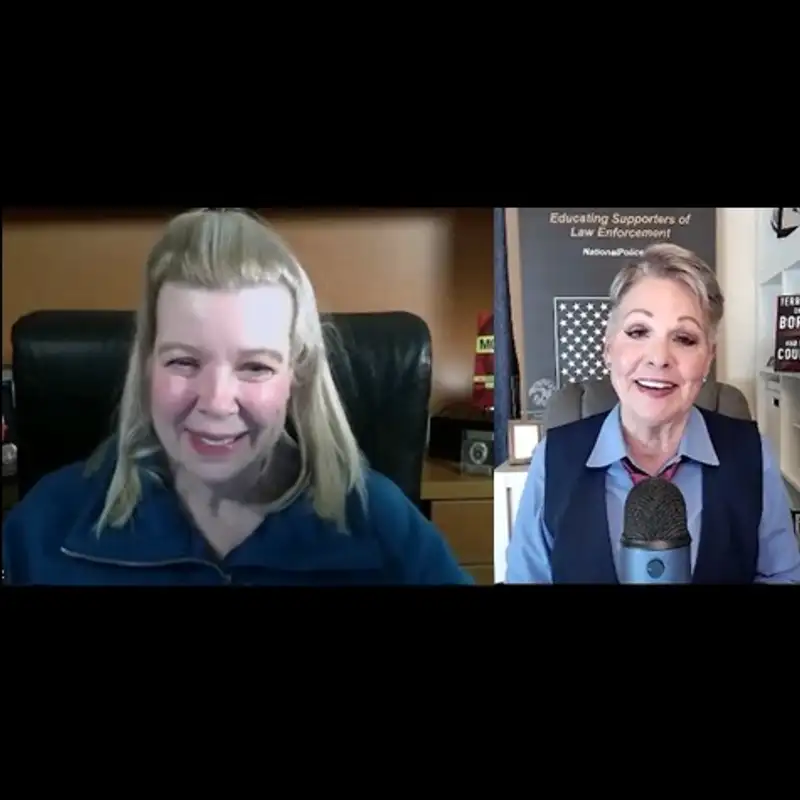
NPA Podcast with Anne E. Schwartz, Author of Monster: The True Story of the Jeffrey Dahmer Murders
Hi. This is Sergeant Betsy Brantner Smith with the National Police Association, and this is the National Police Association Podcast. I have a guest today that you absolutely have to meet. She is she has so much going on and so much to share. I actually wanted to get her on first and foremost to talk about her book that it you're gonna find fascinating.
Betsy Smith:But there's so much more to this woman. We actually met years and years and years ago when we were when we were babies. And so, fortunately, we've reconnected, and now I'm bringing her to you. Annie Schwartz, welcome to the show.
Anne Schwartz:Oh, I'm so glad to be here, Betsy. And, yeah. We were baby police people, weren't we?
Betsy Smith:Absolutely. You know? So I was in Illinois. You're in Wisconsin, and, you know, I did some some training up there. And and you were the the PIO, the public information officer.
Betsy Smith:And we're gonna talk a lot more about that because that's something that's really in the news these days anyway. But first and foremost, I gotta ask you, how the heck did you get involved in law enforcement?
Anne Schwartz:You know, it's a question I ask all the time, but I I absolutely know the answer. And that's that I was I was an only child. There's no sad story here. I'm just to warn everybody so they don't all of a sudden turn away. It's like, oh god.
Anne Schwartz:Not another one of these. But I was an only child, so I was always doing stories in my head. My mother bought me Nancy Drew books, so I thought being a detective was about the coolest thing in the world. I liked I liked Nancy, and as time went on, I got just really into TV shows, police procedurals, you know, Adam 12, Dragnet. Those are my era.
Betsy Smith:All the reasons I'm a cop.
Anne Schwartz:Absolutely. Absolutely. And and let's not forget, it's cool. And so I just I I I loved that idea. I knew that I wasn't brave enough to be an actual police officer.
Anne Schwartz:I always knew that. A little bit princess y, so, you know, that wasn't gonna work. But but I did I was always interested in telling stories. So I started out as a storyteller. It's really what I'm still doing today.
Anne Schwartz:But I started out telling stories for the school paper, writing my own stories. And and then by the time I got to college, I went to Missouri, University of Missouri Columbia. They have an amazing j school there. And this is back when there were only three tracks. Now there's probably like 12 or something, but it was, you know, TV and radio, print, magazine.
Anne Schwartz:You're done. Yeah. Oh, advertising, I think, but that those were different kind of kids. But, yeah, it was it's been a love of mine forever. I've always loved the police since I'm a kid.
Anne Schwartz:Grew up in a in a smaller town. I was born in New York, but grew up after after I was 10 years old, grew up in in a very small town in Wisconsin where you knew all the police officers. And it was that positive experience. I mean, you know, when they started calling it community oriented policing, said, who was it oriented to before? But I just loved it so much.
Anne Schwartz:So being a crime reporter just made sense because you've got to kind of pull that curtain back and really get into the the the, you know, the the bones of a story and learn how things come together, learn how the justice system works or doesn't.
Betsy Smith:And that's I talk to a lot of crime reporters, obviously, and that's there's there's there's two people that are more cynical than cops, police spouses and crime reporters. And and, you know, you're you're so right about that because you do see you see the same underbelly, frankly, that law enforcement sees. And and so you end up at the Milwaukee, Wisconsin Police huge police department, busy police department, and and you end up as the public information officer, which is for folks who don't know that you're the person out there kind of in front of all the cameras, talking about, you know, especially cases that are noteworthy, in the public. And, you know, the media, wants to know what's going on in their police department, whether it's a a major crime, whether it's an officer involved shooting, things like that. And and I'll I'll I'll say this.
Betsy Smith:Law enforcement has not traditionally done a great job in dealing with the media. There's been a real, difficult isn't
Anne Schwartz:so, Betsy.
Betsy Smith:I know. Right? It's been very it's a very love hate relationship. And and, frankly, back in the back in the eighties and and even into the nineties, you know, something would happen, and and the chief would have the the public information officer or whoever, you know, write a press release, and that was kinda it. And then they'd run from the media.
Betsy Smith:Now you have no choice but to deal with the media Right. Because it's not just three television channels in the newspaper that are the media. So and before you got involved with the Milwaukee Police Department, you were you were a reporter. And in 1991, and I think I think I had just become a sergeant, a case came out of Milwaukee that literally rocked the world, and that was the Jeffrey Dahmer case. And and at that time, here you are.
Betsy Smith:You're a young reporter right at the forefront of what would turn out to be one of the probably top 10 most infamous serial killer cases ever. Right?
Anne Schwartz:Absolutely. Absolutely. And, I mean, I'm a nice girl from that nice little town we were talking about before. And, you know, my my father had dreams that, you know, I was going to write about Proust or something, and instead, you know, there's the Dahmer book. But no.
Anne Schwartz:I was I was a cub reporter, and I started in 1987. So it through the in those years before the Dahmer case broke, in those four years, I went to every single scene you could possibly go to. I went I did ride alongs. I don't even know if they do those anymore. But I did ride alongs with the cops, and they just thought it was hilarious because they like to bring me in scenes, you know, where I'd see something awful and they were waiting for me to, you know, throw up or scream, and I never did either one of them.
Anne Schwartz:I said, oh, that's interesting. So, you know, that wasn't as fun. But but I I always there was always a willingness, I believe, that I conveyed to them to tell the story. And it wasn't to tell what I saw, it's to tell this it was to educate the public, and I still believe that's the role of a of a public information officer. You have to teach the public what's going on.
Anne Schwartz:You can't just get out and talk about a police involved shooting, which is something that I did recently. You can't just get out and talk about that. You have to kind of teach people. Here's the training officers go through. Here's what they're taught.
Anne Schwartz:Because you're always gonna have some reporter who's 12 years old who's gonna ask you, why didn't you shoot him in the leg? Or why didn't you shoot the gun out of his hand? And so you're you you become really an instructor, an explainer of those things. And I love that because I was lucky enough in my career to have people that did that for me. There was a a female lieutenant who was always really good to me, Nana Hagerty.
Anne Schwartz:And Nana was always good to me, and we we we work together a lot. Always did good stories together. And, wow, if she doesn't become the police chief in 2004 and called me up and said, I have the craziest idea for you.
Betsy Smith:I love that. So so talk about the Dahmer case. Tell tell people briefly why it's so infamous and and what led you to write the the the book about this case.
Anne Schwartz:Mhmm. I would love for that to be a really thoughtful answer, but somebody asked me to write a book. I said, you betcha. That was that was, like, almost Minnesotan, wasn't it? You betcha.
Anne Schwartz:But, no. I you know what? I was I got a call at about 11:30 at night on a landline. Kids, that's the phone that connects to the wall
Betsy Smith:Google it.
Anne Schwartz:Everything else. Google it. Yeah. Google Google what is a phone. But I got a call from one of my my sources, one of my good cops that I had known.
Anne Schwartz:And he was one of the first on the scene at at an apartment, and his message to me was, Annie, it looks like we've got a guy here who's been, like, saving body parts in his apartment. It's weird. I you know, we don't there's some Polaroids in here that are, like, horrible, and I I thought, oh, we're having fun with Annie again. This is another one of these things where you get me to come to, you know, a horrible neighborhood at midnight and then laugh because, you know, because I'm there. But there was something in his voice, Betsy, that was that was shaken.
Anne Schwartz:And I don't see crime scenes that shake very many cops. Certainly, anything that involves kids Yeah. It's always difficult. But this was this was something different. This was like fear and I never hear that in their voices.
Anne Schwartz:So I went and what I ended up doing is I got there before the detectives were even there. And I didn't, you know, I don't know any better. So I just go walking up the stairs and I stood at the threshold. I never did walk in Dahmer's apartment because that's just not so smart. Plus they were already putting up the tape in front of the door.
Anne Schwartz:So I look kind of inside and then I see Rolf Mueller who was a cop I knew really well leaning up against the wall and he's got his hands over his eyes and and he just looks like he's gonna faint or throw up or something and he didn't he didn't talk, he couldn't talk. So I, you know, kind of put back outside and I start to talk to the witnesses. I start to talk to people there and that's where the story starts to come together. It was this weird guy named Jeff who lived in that apartment. He was a loner.
Anne Schwartz:Oh my gosh. Stop me when you've heard this one. Right? He was a loner. You know, he we really didn't talk to him much.
Anne Schwartz:You know, but then one the the one neighbor, you know, gave me one of what is any number of horrible quotes from that evening. We always used to see him taking out a lot of garbage, but he never brought groceries home. It was so weird. And I'm writing, I'm diligently writing this down because I never used a tape recorder or anything. I'm just getting those impressions.
Anne Schwartz:And those people were scared. Crime scenes are places where, I mean, people are trying to they're maybe trying to get on TV, although TV wasn't there yet. They were, you know, they were still, you know, doing a hair tease or something at home. And there I was dressed incredibly inappropriately for a for a crime scene that was going to be a national story. But I started putting the story together.
Anne Schwartz:I started working my sources. I talked to the people who I had always talked to and who I'd always treated fairly and that that was the key right there. So many young reporters you know, you don't you don't get the Jeffrey Dahmer story by sitting in the newsroom and never leaving your desk. You don't get the Dahmer story by texting everybody, and and then you never really meet for coffee or you really don't know them. I still work with reporters to this day.
Anne Schwartz:I work with them now instead of as one. And I really don't have a lot of use for reporters that that I've never met, that never made an an an effort to say, scrub a coffee. It really is that easy.
Betsy Smith:Yeah. Everybody can be an online warrior. Right? But to be a real journalist, you gotta get you gotta go outside.
Anne Schwartz:Absolutely. And the cops have to see you go there. They have to see you come to the scenes. They have to see when I was when I was really getting into the beat, I decided to go. There was a a group called the Cigar Babes out at a a cigar bar in in one of the suburbs in Wisconsin, and I started going there because I wanted to learn all about cigars because this is what the cops are doing in every one of these scenes.
Anne Schwartz:Now what I learned is they're smoking, like, really nasty cheap cigars just because the smell is not so terrific, so we gotta get rid of that. But I started learning about about cigars, and then I started bringing, like, the enormous handbag full of cigars to these scenes. And then I it became like, you know, hey. What do you got today? And I mean, it's it was just crazy.
Anne Schwartz:I mean, pick one of the vices, learn about it, and show up. But that's relationship building, Betsy, and that's something that I think that a lot of these PIOs forget to do. And I think that in in back in the day when I was when I was covering Dahmer, there was no PIO at the Milwaukee Police Department. It was a, you know, a large department, 2,000 sworn, and they are they they had a a like the chief's adjutant who was a captain. But what the bottom line was there is it's still somebody who's a cop, who's trying to tell the story.
Anne Schwartz:This was a hard story for them to tell because there were any number of of awful things we weren't sure you could say on TV. I mean, that was a big deal or broadcast or put in a newspaper. As I sit here in my office, I see the headline from the journal that day and it says, body parts litter apartment because we found out that Jeffrey Dahmer was a cannibal. Although when I talked to him he denied that. He said, you know, that he was just kinda curious because he was very attracted to the men that he killed.
Anne Schwartz:He he wanted to figure out a way to keep them as zombies. I mean, this is the ultimate, you know, mom abandoned me and I wanted somebody to be in my life but I didn't want them to ask anything of me. And, you know, that's that was Dahmer's MO right there. So interestingly enough, he says now we are taking the word of a serial killer. Right?
Anne Schwartz:Right. And we found out that, you know, he had killed about he had killed 17 men and boys over the period between 1978 and nineteen ninety one, thirteen years free, sometimes with some pauses in there. And delving into this story was like nothing I had ever seen. And the police officers who were, you know, questioning him, they were like they were like the stranger detectives. Right?
Anne Schwartz:Because they could they they could go in there. You know, I mean, what is it like to watch somebody do a really good interrogation. Right? I mean, it's it's like good TV. And they connected with Dahmer.
Anne Schwartz:And I think if not for those two detectives, we don't get the confession from Dahmer where he laid out every single murder, where he met the person, when he met the person, that enabled the police department to match up everybody and to finally get, you know, get a hold of families and say, your son is no longer missing.
Betsy Smith:And that's the thing. The closure that this case ultimately brought to a number of families is is is kinda one of the untold successes, I guess, if you will. Because, again, he'd been doing this for so long. Mhmm. And and, you know, and the only reason he got caught is his final would be victim was able to escape.
Betsy Smith:Correct? Yeah.
Anne Schwartz:Right. And two cops were looking for some overtime. Right. I wish it was more dramatic than that. I wish it was one of those dragnet setups, but it really wasn't.
Anne Schwartz:They're like, yeah. You know, there's a guy walking down the street with a handcuff dangling on his wrist. Let's let's see what's going on. And they rolled down the window and said, hey. Which one of us did you run away from?
Anne Schwartz:Right. And then he starts to tell an incredulous story, and that is the beginning.
Betsy Smith:Right. And it was a story that really most street cops would go, okay, kid. Sure.
Anne Schwartz:And
Betsy Smith:and, you know, and and so as you know, when you when you look forward then as a PIO Mhmm. It's true that you really don't know when something that you're going to be talking about is going to reach the attention of the world, do you?
Anne Schwartz:You don't. And sometimes it comes in very strange ways. I had been asked to make some comments to a national television station about the Nancy Guthrie case comparing it to a case that we had here in Milwaukee of two missing boys that just it just seemed like they vanished out of nowhere. And for twenty seven days, I was on TV live twice a day. I and even when I didn't have anything to update, you know.
Anne Schwartz:I know you and I'll talk about that sometime, but even if you got nothing, you do have something. Yeah. And and it's just amazing because you're like, no no no. This is Milwaukee. This kind of thing, serial killers, that doesn't happen here.
Anne Schwartz:And that's really the that people couldn't believe it. I believe that the interviews that I did with people that night on that front lawn where they were holding their bathrobes close to their their their necks, you know, and it was hot all it was a hot July night, but they were still just, you know, and quiet. Mhmm. You know, so quiet. And that's not like a crime scene.
Anne Schwartz:A crime scene, everybody's screaming and yelling and whatever. And people were just I wish there was I really should use my expensive English education to have a better word than they were freaked out. But they were freaked out because they were living amongst this this activity that is just now coming out. And the interviews I think that the police did that night and that I did that night were the last genuine interviews that those people gave. Because what happens as the days go on is, you know, there was a woman that I talked to that night and I went back to see her like a couple days later.
Anne Schwartz:And I said, hey, you know, Pamela, can we can we talk about this again? You know, I wanted to well, can't today because I'm going on Oprah. I said, okay then. Well, you go do that. That was how that story goes.
Anne Schwartz:That's how those stories go. Yeah. And that fascinated me. And I think that is what led me to be interested in the other side of sharing public information, which was not just going to get it, but getting it from the source and then figuring out a way to translate it to reporters so they could do a decent story.
Betsy Smith:Because there is an art to that. The being able to communicate what a law enforcement agency knows and needs to share. And, again, like we talked about off camera too, it's a it's an art. There's no other way to say it.
Anne Schwartz:And if you think about the evolution of police public information, I look at George Floyd as one of the seminal moments in public information because right up until George Floyd, 05/25/2020, that was the last time I think the public or I should say reporters took a press release that we wrote about an officer involved incident and pretty much printed it the way it was. That is the last time because all of a sudden, no, we're asking more questions. We don't believe it. We want to hear more. There were deaths in custody and the blame game started right away.
Anne Schwartz:Now the blame game starts pretty early, but this really started early. And I just I never felt that the police were doing a very good job not of defending themselves, but of getting out there and saying, hey. Let me just tell you how this works. You know? You're trying to
Betsy Smith:If we don't get the information out there, law enforcement Mhmm. So their information's gonna come. Right?
Anne Schwartz:Oh, absolutely. I mean, that's when, you know, that's when you get the I mean, I've seen it. I've been part of it. I was, you know, I was part of the department when, you know, people would show up when we had missing people. You know, they'd show up with, like, the family dog, and they're like, Fido can smell, you know, missing people and the psychics and everybody.
Anne Schwartz:But the thing I learned about that, and I learned that the hard way, was that if you don't have the person in custody and you haven't found the person you're looking for, then you have to take anybody's help who offers it. Because then the next crappy story you're gonna get is that person going to the media and saying, hey. I offered to have, you know, have Rover go and, you know, and and and do some, you know, do some bloodhound kind of stuff. I mean, it'd be like the oldest mangiest dog. I mean, like, they have to I you know?
Anne Schwartz:But you have to let people help. Mhmm. And I learned that the hard way.
Betsy Smith:Well and people get invested, especially now. True crime is the biggest genre in podcasts. Right? And people really get invested. Because
Anne Schwartz:people it's the number one procedural on on television. It's the number one genre. It's funny because my book came out at first in 1992, and the first book only took you through the trial, and then the book ends where Dahmer's walking, you know, out of the courtroom saying, you know, goodbye and that's it. Of course, as we as we learn don't wanna spoil the ending for anybody, but, you know, as we learn, you know, he gets murdered in prison. And and then there's a whole story with that.
Anne Schwartz:And then all of a sudden and and I gotta tell you, I mean, I I was just I was bummed that I wrote about Jeffrey Dahmer in that first book, not and I didn't come up with Harry Potter because that would have been different. That would have been better. But I didn't. I sold, like, 11 books or so. I knew everybody who bought a book that for of that first go around.
Anne Schwartz:And then when Haschette, the publisher, approached me in 2021, I had written a a magazine piece about, you know, now we're coming up on the, you know, on the thirtieth anniversary, if you wanna call it an anniversary of this case, lessons learned. And then I I I said, well, are you gonna keep the first part of the book the way I wrote it? And they said, yes. But unfortunately, some of your expressions don't stand the test of time. And I thought, oh, just okay.
Anne Schwartz:Whatever. You bet. Go have at it. I mean, you know, I wasn't I wasn't I wasn't Jackie Kennedy, the editor. Was Right.
Anne Schwartz:And and so what I ended up doing was they reprinted the the first book and then I added a new afterword that covered the murder of Dahmer in prison, but then I did a where are they all now? Where's the prosecutor now? Where's the where's his defense attorney now? What happened to Dahmer's parents? Where, you know, Dahmer has a brother that no one has successfully ever interviewed or seen.
Anne Schwartz:We don't even know what he looks like. They essentially put him in whit sec after after the case.
Betsy Smith:Yeah.
Anne Schwartz:He couldn't go through his life as David Dahmer. But but the when it came out in in 2021, it was a number one bestseller on Amazon. And I'm just thinking, where were you guys when I was, like, eating cat food 1992? But it wasn't a thing yet, you know, and I think we needed cable TV to make it a thing because there's nothing you can't show on cable. And I just I I did an interview with a woman who was the executive producer at the time at the TV station that I was working with, and she remembers sitting in that booth with her finger right near the edit button in case anybody would say something awful in court during the trial.
Anne Schwartz:And that's what she did for two weeks or three weeks was, you know, just be ready because we didn't think people could handle that. I mean, now I talk about this case to high school groups, and those kids ask me questions that that are like, does your mommy know you know about that? Oh,
Betsy Smith:absolutely. I my youngest loves true crime stuff. She wasn't even born when this happened, of course. And but, you know, she's fascinated with this case. So so many people are fascinated with this case.
Betsy Smith:And, again, I put it at the top 20 of all serial killers Absolutely. That we you know, and and, you know, maybe even more because it it and it was so shocking
Anne Schwartz:Yes.
Betsy Smith:Not just to the country, but I know, really, again, to the world. And, really, there are very few people that you talk to of almost any age of, you know, over the age of 25 where you say Jeffrey Dahmer, and they don't know what you're talking about. I mean, everybody everybody knows about it. And I, you know, I think that's why the book has been so successful and and why you are so successful too because you go out there now and and and you teach, how to talk to the media because, you know, you have see again, you have really seen this whole evolution of the media itself, law enforcement dealing with the media. And then with social media, you know, you you you add that on top.
Anne Schwartz:Oh my gosh. It should be there for social media. But
Betsy Smith:Yeah. I mean, that's the thing. The whole the whole, adding social media to this has has really, you know, there's, again, there's the good and bad of of all that.
Anne Schwartz:But
Betsy Smith:Of course. You know, that that's another reason why I think just interest in the Dahmer case Yeah. Has has peaked again because of all the podcasts and all that stuff.
Anne Schwartz:Mhmm. And then all of a sudden, you know, some guy in Hollywood says, that's a good book. That's a good story. I think I'm gonna tell that on Netflix.
Betsy Smith:Right.
Anne Schwartz:And I'll spoil the ending for you. No. I didn't I didn't get a dollar from him. But that's what happens when you write about something in the public domain. There's another less learned check.
Anne Schwartz:But he Ryan Murphy, of course, did the Netflix movie about it and made his he says very openly that his goal was to make Dahmer an understandable character to the public. Well, that was never my goal. I didn't know, I mean I I we wanna know why but that that series created what is truly an incorrect narrative. It came out about I think six months after my book did. Mhmm.
Anne Schwartz:Or they started working on it about six months after the book. And what I ended up finding out was I thought, okay, how am I gonna do this? I'm not gonna, you know, fight with a guy who's got a $100,000,000 deal with Netflix. So what I did is I I said this is the perfect companion piece. This book is the perfect companion piece to that series.
Anne Schwartz:Because you can watch the series because it is entertainment if that's your hey, if that's your your kind of entertainment, it's okay. And then you should read the book to see what actually happened. Right. Because it should shock anybody to know that there were dramatizations and that there were embellishments. There were, you know, outright untruths.
Anne Schwartz:Yeah. And it also let's be honest, it was a very negative portrayal of the police.
Betsy Smith:Yes. And I Which is not untypical of so many of the doc the crime docudramas that streaming networks do.
Anne Schwartz:But I you know, Betsy, when I talk about this case around the country, there is something that I always, always talk about, and that is the fact that, as everybody knows by now, there were two officers that responded to Dahmer's apartment several months before three months before he was discovered. And because he had taken a Laotian boy home with him remember, he doesn't abduct anybody. They all go willingly. Right. And that's a hard thing to say because when you say that out loud, people go, oh, so you're saying they deserved it.
Betsy Smith:Right.
Anne Schwartz:It's like, no. We're just giving you context for how this thing happened. And and these two officers were vilified. They had death threats. What happened is they Dahmer gave a very plausible explanation for why that kid had run out of his apartment and went running naked up the alley.
Betsy Smith:Right.
Anne Schwartz:He said, oh, he said, yeah. He said, that's my boyfriend. He, you know, he drinks too much. He doesn't speak English which is why you can't understand him. Well, no.
Anne Schwartz:The reason he can't understand him is because Dahmer had already drilled a hole in the top of his head and was getting ready to put muriatic acid in
Betsy Smith:there Right.
Anne Schwartz:To try and create a zombie. Yeah. And, you know, the so these two officers believed Dahmer. They saw Polaroids of Chonorex synthesophone, the boy, who was in very sexualized positions both naked and, you know, and with with underwear on in the apartment. They see that.
Anne Schwartz:They see his clothes folded neatly on the corner the couch and he's not screaming and yelling for help.
Betsy Smith:Right.
Anne Schwartz:So what would you like those two cops to do? What probable cause would you like them to use to say, you know what? I bet if we go in the next room, I bet there's a rotting corpse on the on the bed. Right. Well, was, but please, you know.
Anne Schwartz:Mhmm. Right. We're all curious in the aftermath. The hardest thing in the world to do is to put yourself in that police uniform on that night and and say what what were they thinking then. We didn't even I don't remember knowing what a serial killer really was.
Anne Schwartz:I don't remember, you know, I I used the word cannibalism and I remember I had to look it up because I'm like, how do you spell that? And, you know, it was but but the police were treated horribly horribly for their work on the Dahmer case. And and I promised those two officers that I would spend at least a minute every time I talk about the case saying that those police officers did not do anything wrong.
Betsy Smith:Absolutely. Absolutely. And I'm I'm so glad that you're doing that. You're talking about it, and and you're going around the country talking about this case and trying to train agencies better. Where can people find you?
Betsy Smith:Find the book, because, boy, you gotta read this book. Find you, bring you in, and, so that you can, you know, you you can continue to help train people how to do this right.
Anne Schwartz:Well, I I help them tell their story. First of all, help them tell their story in a way that's at least interesting to the public for those stories that are just good, proactive, nice, hey, the cops did a good job stories. But I also help them do it without getting sued because I have an expertise in in litigation communication. So but you can find my book where I wherever books are sold. But Amazon has it.
Anne Schwartz:You can get the audiobook, and then I can read to you for five hours. I don't know why my husband will not listen to that in the car. I don't think it's nice. And then you can also you can get at Barnes and Noble, just about any place where you where you buy books. And it is I I will I I'm sure you have a website for your for your podcast.
Anne Schwartz:Happy to give you my my email address to put on there. I answer people's questions. A lot of times people reach out to me on different platforms. On Instagram, I'm anne schwartz nine one one, of course. Of course.
Anne Schwartz:And, you know, on LinkedIn, you can you can look at, you know, my my checkered history.
Betsy Smith:Annie Schwartz, you're just you're an amazing person. We're gonna do a part two to this. Absolutely. Everybody start looking forward to that. But in the meantime, thanks so much for spending spending so much of your valuable time with us today.
Betsy Smith:And if you'd like more information about the National Police Association, you can visit us at nationalpolice.org.
Narrator:Every day, the brave men and women of law enforcement put their lives on the line to keep us safe. But they need our help to continue their mission. Activist politicians, progressive prosecutors, the ACLU and the rest of the anti police forces receive millions in donations from extremist pro criminal elements like George Soros and woke corporations. The National Police Association is fighting them in courts around the country including the United States Supreme Court defending officers who are being attacked for doing their jobs. Additionally, the National Police Association works year round to pass tough on crime legislation to put and keep criminals behind bars.
Narrator:Consider going to nationalpolice.org and donating to keep us in the fight. Together, we can win. That is nationalpolice.org.