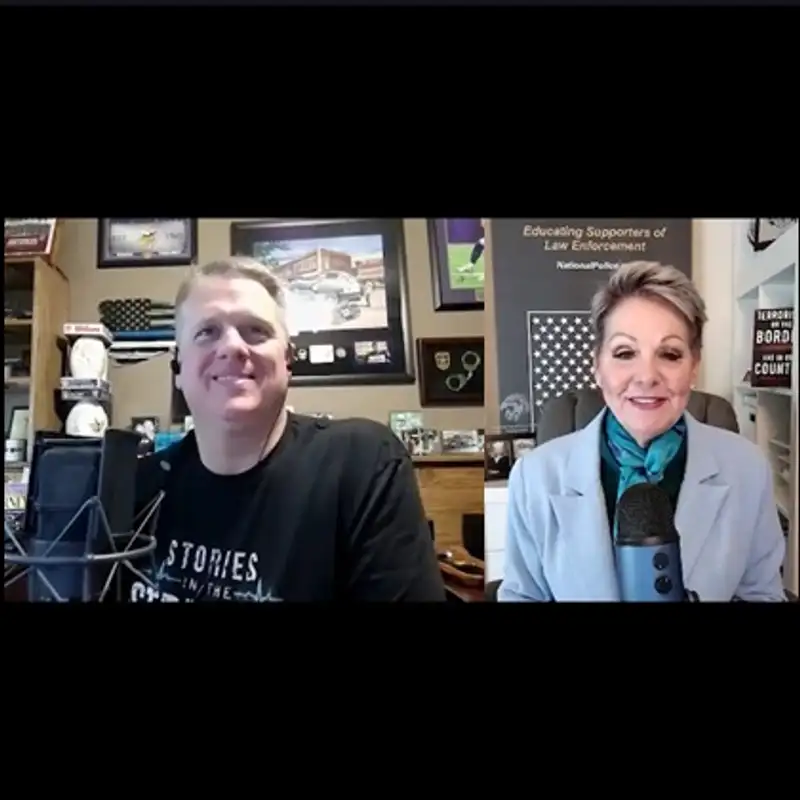
NPA Report with Guest, Dustin Reichert, Retired Deputy, Purple Heart recipient, author and speaker
Hi. This is Sergeant Betsy Brantner Smith with the National Police Association, and this is the National Police Association podcast. My next guest I talked to in 2021 because he had been involved in a shooting as a law enforcement officer in Minnesota, and and the whole thing surrounding the shooting and his recovery was absolutely fascinating. And and I would advise you to go back, go to our YouTube page, and rewatch that episode. But I wanted to bring him back because this guy is really the picture of resilience.
Betsy Smith:He took this traumatic incident, and and he's really turned it around to a point where he's out there inspiring others on so many levels. So I thought we had to bring him back. Deputy sheriff Dustin Reichert , welcome to the show.
Dustin Reichert:Thank you. Thank you. I'm I'm happy to be back.
Betsy Smith:I'm happy you're back. You look amazing. Thank you. And here's the thing. Your your story and we'll we'll remind everybody of your shooting.
Betsy Smith:But that's that one the ending. Right? That was the beginning.
Dustin Reichert:It it it turns out it was neither the ending or the beginning, and it took me a long journey to figure that out.
Betsy Smith:So let's talk about that. Start with just reminding folks about this shooting that you got into.
Dustin Reichert:You know, without going deep into it, because you're gonna have to go into the archives to see it. But loud music call, Thursday night, full moonlit night, no party in the driveway. It was Bee Gees music playing. And, yeah, the the lowest threat of a loud music you could get. And within the next thirty seconds between my partner and I disco dancing in the parking lot, I was exchanging gun battle with the individual.
Dustin Reichert:And I was struck twice by two forty five calibers, and I struck him once, and it led to his death and and a complete change in my life.
Betsy Smith:First of all, no one calls the police on the Beechies. I I I I thought that then. I think that I'm just like, I have never heard of another another story like this one.
Dustin Reichert:Yeah. It's we we were both surprised. I just said, hey. You hear that? She goes, what?
Dustin Reichert:I go, that's the Bee Gees. And then we both started disco dancing right there
Narrator:in the driveway.
Betsy Smith:So, you know, after the shooting, you medically retired from your agency, and and and let's talk about how you started because this happens to, you know, most police officers who've been involved in in an officer involved shooting or some sort of traumatic incident. You start to process all of that, and and you really you made some pretty extraordinary discoveries.
Dustin Reichert:It was a it was a lot of leaps and bounds. I had to go from let's just say there were a lot of lessons learned by the agency and the administration that day. Go back to the other episode to figure that out. And and I had to figure out my journey. And the first journey was I can't be the cop I wanted to be.
Dustin Reichert:My arm was bothering me, but the process was breaking me. And it was breaking my spirit and my soul, and I loved to be a cop. I was fun, goofy, pleasant. I rock and rolled when it was time. And so I, I retired, and then I spent the next twenty years drinking and partying and few treatments here or there, and it took until about COVID before I realized I needed more help.
Betsy Smith:And that's the thing. When you when you're forced to retire medically, that's a whole different situation. You know, I I've talked to a lot of officers, and I know you have as well, where that's a it's it can be a real devastating blow. And a lot of people look at that and think, well, heck, you're gonna get you're gonna get a pension for the rest of your life. You might get free medical, things like that.
Betsy Smith:But when you are forced out of the profession that you love, not by your own choice, that's kind of another trauma. Right?
Dustin Reichert:Yeah. I mean, I spent, you know, ten years in that career and probably up to ten years before that preparing and grinding. It was during a time where it wasn't easy to get a job. So we had to fight just to get the jobs. You had to fight to get past probation and training.
Dustin Reichert:And then you had to fight to find your place. And it was it was tough on me because I knew my place. I I had just gotten off the drug task force. I was feeling great. I was coming back in the fall.
Dustin Reichert:I just happened to be temporarily taking over for somebody while they were in Iraq. And I thought, wow. I I I didn't I'm not saying I can handle everything perfectly. I just walked out of that age or after the task force thinking, alright. Whatever's put in front of me, I believe confidently I can handle it and with an acceptable outcome.
Dustin Reichert:And that is an amazing place to feel as a police officer. And a month and a half later, I'm sent in this spiral where I'm not only dealing with, you know, fighting for my life, but I'm fighting for my job, my career, my reputation, and everything for something that I had no choice but to handle. So it was it was quite the lost. I was I was literally lost. I was lost.
Dustin Reichert:For twenty years, I was just lost.
Betsy Smith:So walk us through that whole process, which I know it could take we could talk about this for days. But but walk us through it and what you started to discover as you moved forward.
Dustin Reichert:When I had a a right towards the end of the fight with the agency, I had gone through some EMDR training. I said it wrong in the last episode, but it's eye eye movement desensitization and reprocessing. Super powerful. Some people don't love it because it is very vivid, but I find that most cops I know, we run into stuff anyways. We just wanna face it and get it over with.
Dustin Reichert:EMDR tends to be the way.
Betsy Smith:Well Right. And explain to people what that is. It's basically it's flashing lights and things and
Dustin Reichert:It's diff you could have paddles that vibrate right and left, the flashing lights. My first one just did a stimulus like an HTN test. It's bilateral stimulation is what it is, and it creates a iFlip. My original therapist basically said it takes your memories that are locked in your short term memory and downloads to your long term. Not really, but okay.
Dustin Reichert:If you're a computer nerd, you have to defrag your your hard drive sometimes. That's what it is to me. You have all this stuff all over. And when you defrag your drive in in your brain, it reorganizes it. You process and think better.
Dustin Reichert:Because it's really about unprocessed trauma. And and that it was effective. It was powerful. It was exhausting. And then you thought you were fine because that's what cops and first responders do or people.
Dustin Reichert:I feel better. I don't need to go back anymore. I feel better. I need to take medicine anymore. And I just self medicated after that until I came to realizing that I have a problem.
Dustin Reichert:And in 2020, 2021, I realized I have a problem and I need to address it.
Betsy Smith:So how did you begin to do that? Because, again, and we're told, well, if you think you need help, get help. And but there's there's a lot of choices, but there's a lot of, you know, therapists and therapy and things like that. And not everything works for everybody. And especially when you're talking about first responder trauma, it can be some weird stuff.
Betsy Smith:Right?
Dustin Reichert:Yeah. It well, to start with, and and all my brothers and sisters, the badges and patches are gonna roll their eyes, it's okay to get a therapist. As a matter of fact, I challenge you, would you rather be like me and wait until you're drowning to ask for help? Or would you rather spend the time going out finding the right therapist? Because I've had them where I'm like, okay, we're not a match.
Dustin Reichert:I don't go back. I go to somebody else. Find the person. Those are my four walls for that hour. Nobody else owns those walls.
Dustin Reichert:I find somebody I trust. I wish I had somebody that I knew and trusted. When I went the first time twenty years ago, she was amazing. I trusted her. I went back here, later on and and and I had one that just stared at me with big eyes.
Dustin Reichert:And she wanted to talk about the shooting, and I finally said, hey, I've been through therapy a lot. I'll talk about the shooting I do all the time. I can tell there's something more. I just wanna let you know. And then she made the mistake of asking me how something made me feel and I I was done after that.
Dustin Reichert:It just wasn't my connect. I did go to another therapist and I said, alright. Let's just be upfront with you. Don't stare at me weird. Don't ask me how it makes me feel.
Dustin Reichert:I'll talk about the shooting, but here's what really happened in my life that I realized have started to come through. And she just looked at me and Betsy, I don't know if you're gonna allow me to curse or not, just looked at me and she looked at me and says, alright. Well, let's get you un you can fill in the rest.
Betsy Smith:F'd. Absolutely. And and let me say that, and this is something we talk about is as a profession, In law enforcement, we're really starting to learn now that just because you go to somebody that has a bunch of letters by their name or a doctor in front of it or whatever doesn't mean that they're going to be able to help you. And especially, again, we're talking about police trauma, first responder trauma. What happens with a lot of our police officers who who go to a therapist, you know, they look it up in online or, their HR tells them go see this therapist because our insurance covers it.
Betsy Smith:Very often, one of the things our first responders do is they end up counseling the counselor because a lot of people in the mental health field, they're not used to the trauma that we see every day. And what they think is traumatic is not necessarily what we think is traumatic. And your shooting is a perfect example. I think we're starting to learn in law enforcement that we just anticipate that people are going to be absolutely traumatized by their officer involved shooting. And very often, we find out that there's so many other things.
Betsy Smith:And, again, in your shooting, you saved your life. You saved your own life. You saved the life of your partner. That's something to not feel bad about, and we kinda make you feel bad. But then, you know, a lot of us, probably most of us, come to this job with other stuff before we ever get involved in trauma.
Betsy Smith:Am I right?
Dustin Reichert:Oh, so backing up, one of the things I didn't tell you. So I'm I'm sure you know who Randy Sutton is from the Wounded Blue. And Randy was the he had gotten these injections he was posting about. So that's actually when I went back. Happened to be in Vegas.
Dustin Reichert:I was like, alright, bro. We're smoking a cigar, having some Gold Slager when I drank. And he hates Gold Slager, but he would drink it with me. And and I'd be like, tell me about these shots, dude. And he's telling me, he's like, well, I did it so I could promote it.
Dustin Reichert:But he goes, you know, I feel at peace. So that's actually what started my journey. I went home, and for the next three weeks, I was like, I wanna know what peace feels like. And it literally, like, would get me emotional, so I went in for the shots. I made a mistake when I went in, though.
Dustin Reichert:I made a mistake of not having that mental health support ahead of time. So when those shots let my wall down, and I had an emotional dump and everything else, and I was getting calmer on one hand, but I wasn't prepared to deal with living a life with no wall down because I had no support system. And so that's one thing I wanna tell people is make sure when you jump into these, just build a relationship with a therapist first, and then things become a lot easier. But what you were talking about, what we're bringing to the badge. When I had EMDR twenty two years ago, whatever it was, it came out that I was molested when I was eight.
Dustin Reichert:Now, I remember it but I forgot because it was like, alright, it was a one off stranger, no penetration. It was weird. Pictures but polaroids. Didn't love it but it was part of life.
Betsy Smith:Mhmm.
Dustin Reichert:You just move forward. I didn't realize that that stuff just layers in there and layers in that deep brain. And as I went through EMDR again, it was amazing at how I had to go back and finish processing that one. And the time where I was nearly drowned to death in a pool in Minneapolis by some other boys that thought it was funny. And and in a bunch of losses, grief is a big thing that I we realized is a big thing.
Dustin Reichert:So I brought a lot of death to my to my badge. But I'm a firm believer that that foundation or that foundational trauma is what I call it in my speakings. I believe that your foundation and your foundational trauma is what makes you such a dynamic different police officer. It's what makes us diverse. Not just our cultures, but but what we bring to the badge.
Dustin Reichert:The negative side is in when I speak is the what I call the post traumatic response model is we have that cup, and I might come to that badge with a bigger cup than I'm some fuller cup than somebody else. And sometimes it could take three incidents to overflow. Sometimes it could take no incidents. In mine, it took one big one. And I and it was really the agency response.
Dustin Reichert:It brought it to the top, and the agency just kinda pushed it over the edge, and and I I exploded.
Betsy Smith:Do you think that a lot of people are drawn to law enforcement because of their own past trauma, and they wanna change that, make a difference, deal with I think so. Yeah. I would and and I would agree. You know, I I'm one of those people. I came to law enforcement because I literally grew up in a very, you know, nobody's gonna know what this is except you and me, beaver cleaver kind of environment.
Betsy Smith:Know, I had, you know, great parents, growing up on the farm, you know, all stuff, and I really just thought I'm gonna become a police officer because I'm gonna save the world. And but I I have so many friends and colleagues who came to this profession with extraordinary life experiences. A lot of times as children like you that that, you know, you didn't walk in to take the deputy test thinking I'm gonna fix all this stuff, but that's kinda what happened. Right?
Dustin Reichert:I think deep down it does. I I I would venture to guess your world of entering the badge was probably more surprising than my world of entering the badge. For me, whatever I saw, I grew up in North Minneapolis. So I like, oh, yeah. I've seen that before.
Dustin Reichert:Oh, yeah. Whatever. Oh, guns. Yeah. Whatever.
Dustin Reichert:Oh, somebody got shy. I've seen that before. All before the badge. So I I do think that those of us come from a more chaotic life do often get drawn to it because they maybe want a better life, wanna help people. You know, my brother died of DUI.
Dustin Reichert:I had a passion, and he was drinking and drinking. I had a passion for getting people. My my my family had a lot of addiction problems. My passion was for drugs. I wasn't cruel.
Dustin Reichert:It was just my passion to see what I could do to help others.
Betsy Smith:I also think that if you've grown up in chaos, law enforcement's attractive because it's chaos from sun up to sundown. Right?
Dustin Reichert:It's chaos with a paycheck. Exactly.
Betsy Smith:And I mean, that I'm, you know, I'm glad you said that because it's really it's really true. You know? We we see again, you know, we we say this all the time. You know? Your average cop sees more, you know, trauma and violence and whatever in the first two years on the job than most people see in a lifetime.
Betsy Smith:And and, of course, we always have people say this, oh gosh. How did you do that for twenty years or thirty years or whatever? And it's like, what do most of us say? It was awesome. And that seems weird to to a lot of people.
Betsy Smith:Right? How do you explain that to people?
Dustin Reichert:Usually, to me, my theory is is that we're we're we're we're pulling it in just like a drug addict would. We're feeding off of those same chemicals that are rushing our body, the good feeling. You know, me, I I worked out in the country. So when I'm going to a cold call, it could be a twenty minute red light and sirens call at a 100 miles an hour. And I've got either 93 x on or I got a little mini recorder playing on, you know, good super, and I don't even like heavy metal music, but that's what I played.
Dustin Reichert:And and you you just feed off the adrenaline and then, you know, something weird's happened. Most non cops don't know, but soon as they weird some of the worst things we've ever seen, we pull up window to window and you just go, you see that? Alright. So what time are going to dinner? It's not that we mean it.
Dustin Reichert:You know, David Grand is the founder of of Brain Spotting, came from EMDR. Don't know if you've heard of that one.
Betsy Smith:Mhmm.
Dustin Reichert:And so I had it done and I researched it first. It's not impressive because I'm pretty sure he got distracted by something when he was doing his first session. And and he just held a stimulus there, but eventually, he he his theory is that brain spotting opens the window to the deep brain. I don't know how it works, but it works. And and but his theory is is and I really I'm attracted to this concept is that when we're involved in an intense incident, traumatic incident, our bodies and our minds are designed to process afterwards.
Dustin Reichert:Well, when you've gotta go to another call and another call and another call, you just capsule it up, throw it in the deep brain, in the trunk of your brain, and just head off to the other call thinking that you'll process it in your next trauma. But then, of course, the next call, throw it in, and I I he really theorizes that's why we fill up so fast. And that's why that's why cops are so pissy when they get later on the career. Not all of them, but that's why some get really pissy attitudes and and these amazing performers just go downhill and and, you know, the isolation. And it just starts to spiral really, really bad where great cops become less than great cops.
Dustin Reichert:Or, Betsy, my real theory is is if we could find a way to get a handle on dealing with the layers and imprints of trauma that officers and first responders see, I bet we would see a significant reduction in officer abuse, corruption, and everything else. I really believe that strongly.
Betsy Smith:Do you think that if if we allowed law enforcement officers to immediately process that crazy call, that bad situation they were involved in, that we could do a better job of of preventing this kind of long term bad behavior, long term bad feelings, all of that long term, you know, addictive behavior.
Dustin Reichert:I think the problem that we're running into is buy in. We have to find a way to get the officers to buy in to the programs on top of it. I mean, that's true with any human being. Every human being can be great if they go to and therapists and then but getting the officer by him but I know that we have to do something different. You know, if you take my partner did not shoot anybody, but she sat there from about 10 feet away watching her partner and her friend get get shot.
Dustin Reichert:Then she found cover two days on her own, and then she had to talk to what she thought was her dead friend. And so after they get done, they go, so, yeah, you should probably go home. You gotta work at six tomorrow. And and they sent her back to work. Now we're getting better about three days off.
Dustin Reichert:Maybe we need two weeks off. Now at the same time, we wanna go back to work right away. We wanna be normal. It's hard. It's hard to get to figure out where the balance is.
Betsy Smith:Well, also after a trauma, you don't wanna be alone.
Dustin Reichert:Yeah. That's very true.
Betsy Smith:You know? And that's a that's a again, that's a that's another whole problem. And, you know, fast forward now to 2026, most police agencies are short staffed, some desperately so. So three days off, a week off, two weeks off is almost an impossibility with a lot of departments.
Dustin Reichert:I agree. There's so many programs that are finally starting to happen. Even my own agency finally has an embedded therapist. I've questioned it. I I'm not I I understand the checkup for the neck up concept, but it was implemented so poorly on so many agencies that it became a joke.
Dustin Reichert:Well, I'm hearing that some of them are finally getting it. And our embedded therapists at our agency now I've had a chance to sit and talk to her and I've talked to other other, of my old partners, they say it's great. It gets them into teaching them it's okay to go to therapy. Of course, I always say, you know, not for nothing, but I believe that you should also go form a relationship with somebody who's completely unrelated to your agency so that you can be fully open. But no, we're we're we're getting there.
Dustin Reichert:I just don't know how to get the buy in. Don't know to get the administrative buy in when you're when you have admins that say, well, Dustin was in a shooting if they knew me, I get why he has PTSD, but why does this guy have PTSD? It doesn't matter. My I was in a car accident once and my lawyer looked at the other side when they talked about an accident I had ten years before with pain in the same area. He goes, one in for one and for all.
Dustin Reichert:He goes, once you take somebody on, you take it all.
Betsy Smith:Absolutely. So what would you say to police administrators, you know, bosses, big guys and gals, what would you say to them to get them to buy into what you're talking about?
Dustin Reichert:I have to be careful on this. So I'm with a group called Leetech, and I'm proud to be working training with them. And my buddy, the boss man, is always like, just just remember bigger picture. We don't wanna alienate admins. And you know what?
Dustin Reichert:He's right. The more that we push too hard the wrong way to point out the bad, the more they're not gonna do anything about it. I think talking to them about it's tough. The answer is, Betsy, I haven't figured it out. I I think about it all the time.
Dustin Reichert:I talk to admins. I talk to leadership. They'll listen to my story. They'll listen to the stuff I talk about now versus just the shooting. But then I can go watch and hear reputations and policies that and it's just they never match.
Betsy Smith:How'd you get involved in hypnotism?
Dustin Reichert:Yes. For everybody who doesn't know, I'm a hypno I I bought a DJ company after retiring because I was like, alright. I'm not gonna be a cop. I just have to write this off. It is what it is.
Dustin Reichert:And I went to a training one weekend, and I I just got my gallbladder out. I was in a lot of pain, so I was on pain meds. And I just I just kept watching everybody as they were doing it, and I was like, yeah. I'm gonna make money at And I love doing it. It's so different from everything else I do that I can go run and do a lot of training and officer stuff and wellness and writing or whatever and then I can turn around and go to a hypnosis show and it's unrelated and it's completely just turns it completely different.
Betsy Smith:Does it work?
Dustin Reichert:Oh, yeah. Oh, very much so. I was even in Indiana for the Indiana Sheriff's Association hypnotizing a bunch of sheriffs this last spring.
Betsy Smith:I love that. Because I'm I have used hypnotism as a detective and and all that. Plus, you're right. It is just it's it's absolutely, it's absolutely entertaining. And you are
Dustin Reichert:do that in Minnesota. They can't use that for investigative reasons in Minnesota.
Betsy Smith:Right. Now
Dustin Reichert:we need
Betsy Smith:a lot. To get more out of them. You we couldn't either, but
Dustin Reichert:Yeah.
Betsy Smith:We used it.
Dustin Reichert:We don't know anything. We didn't hear anything.
Betsy Smith:Yeah. Minnesota's a special place. Yeah. But but one of the other things I I wanna ask you is how did you start talking to civilian groups, and what's different about talking to civilian groups?
Dustin Reichert:When I talked, I was just talking to him. It was a health care group and stuff. I was talking to a health care group this spring. And one of the things I said is most people say to me, you know, I was involved in this but that's nothing compared to what you went through. And as I was telling the group and I said, you know what, it doesn't matter.
Dustin Reichert:My biggest trauma is my biggest trauma. Your biggest trauma, reasonably, is your biggest trauma. That means on a scale, they're no different whatsoever. I may have to do some more work and it was amazing all the people that came up and talked to me afterwards and were like, I never really thought of it that way. And I was like, well, now now are you thinking about the idea of addressing it?
Dustin Reichert:And everyone that came and talked to me is like, yeah. I had never thought about going to therapy or addressing it. And every I think was five or six of them came up to me afterwards.
Betsy Smith:See, I think that's very powerful because obviously, as cops, we know that there's this whole civilian population who have had all kinds of horrific traumas, whether it's as a child, whether it's as an adult, you know, whatever. And and I'm so glad you said it in that way, your trauma is your trauma. Because again, I've talked to people who say the same thing. You know, I didn't experience anything like you did. Well, yeah, but for you, this was a huge deal.
Betsy Smith:Now let me flip that on its head. We're seeing now, and I hear this, you know, in my own training classes and and, from other, people in our profession that we have a a generation or two of police officers who can't deal with any trauma. In other words, you know, I mean, I've literally talked to, you know, 24 year old cops who are like, oh, I saw a dead baby last week. I I have post traumatic stress. I don't think I can go on.
Betsy Smith:And it's like, you know, somebody like me, it's like if you if you're you saw a dead baby, which is a horrible thing to see, and now you don't think you can go on, maybe this isn't the profession for you. How do we deal with that?
Dustin Reichert:You know, it's funny that you say that because, of course, number one, the old crotchety ones, I guess, we're probably in that that territory now.
Betsy Smith:That's me.
Dustin Reichert:We we're so different than them. I have two lanes on that one. My partner, in my shooting is now a professor at Winona State University, and I have the honor of going to talk to her classes every spring. I love it. And these are some of the greatest students I've ever interacted with, and they're so educated and knowledgeable.
Dustin Reichert:Now I think what happened well, I think what's happening is that they're so well educated on PTSD and I love that it's a general term. You know, some people get mad when somebody say, yeah, I had this happen to me. I have PTSD. And that that makes a lot of cops mad. I think it's great on one hand because finally, it's normalized, which means it can be normal for us to have PTSD responses.
Dustin Reichert:Now, when that model I talked about, the post traumatic stress response model, that's the whole point is if we address and stop thinking of PTSD as the full end run and instead of looking at the moment, maybe by law or by by rule, that person may have had PTSD from that child death. It may have happened by definition, totally. Cops don't tend to be disabled from PTSD. They tend to be disabled from complex PTSD. A lot of people out there will know it as cumulative PTSD, but it's in the bible finally.
Dustin Reichert:It's it's complex p p PTSD. It is normally, it was reserved for sex trafficking and repeated abuse people, you know, the layering. So finally, it's out there. Now we have a chance to educate them, our officers, to understand. Alright.
Dustin Reichert:Yeah. It was a pretty traumatic incident. You don't need to retire out. How about you go start working on it? Get some EMDR, start addressing it.
Dustin Reichert:There's probably layers they haven't done with, and get back to the job.
Betsy Smith:I love it. That's a that because we don't wanna throw away all these cops, but we wanna deal with their trauma. Now you've written about this stuff as well. Right?
Dustin Reichert:I have. I I wrote I wrote my book about October, is more about the shooting and the first layers. I love it because the first layers are about what I first dealt with and I thought I was dealing with trauma. And then I gotta be part of a book project called The Transformational Journey, and that was the second layer where I had I I made an error and it went to editing before I caught it. It says that I injected ketamine into my neck.
Dustin Reichert:It was just a mild anesthetic. It's not ketamine. And then, I'm working another one, about complex PTSD and first responders. It's about a year or so out, though, still. I have two books I'm working on, one unrelated to PTSD, and it's layering the discussion on how we can, number one, get our first responders, our protectors, to open their brains up.
Dustin Reichert:It's okay to go get help. And number two, if they can understand how this all works, I mean, you change your oil on your car, you rotate your tires, and if you don't, you're gonna have problems. And, really, the same thing's true with us. If we don't start addressing our stuff, it's gonna end up being advanced complex PTSD versus I've got some trauma trauma stuff I can need to clean up. Let's just go clean it up.
Betsy Smith:I love it. I love it. Dustin, where can people find you? The books. How can they bring you in?
Betsy Smith:What's your socials? What's your website? Give it to us.
Dustin Reichert:That's a crazy one, Betsy, because I have all kinds. So we'll make it easy. Www.dustinreichert.com. That's where all my stuff is. I'm working on a I'm working on a podcast myself now, actually, Betsy.
Dustin Reichert:It's called stories in the struggle, and I have interviewed 12, heroes from the different responder worlds about, about their different journeys in PTSD, and and, that should come out in a couple months. I'm pretty excited about that too.
Betsy Smith:Outstanding. Well, I gotta tell you. I'm so glad to catch up. I'm so glad that you shared all these things with everybody, and we can't thank you enough for being with us. And if you'd like more information about the National Police Association, you can visit us at nationalpolice.org.
Narrator:Every day, the brave men and women of law enforcement put their lives on the line to keep us safe, but they need our help to continue their mission. Activist politicians, progressive prosecutors, the ACLU and the rest of the anti police forces receive millions in donations from extremist pro criminal elements like George Soros and woke corporations. The National Police Association is fighting them in courts around the country, including the United States Supreme Court defending officers who are being attacked for doing their jobs. Additionally, the National Police Association works year round to pass tough on crime legislation to put and keep criminals behind bars. Consider going to nationalpolice.org and donating to keep us in the fight.
Narrator:Together, we can win. That is nationalpolice.org.